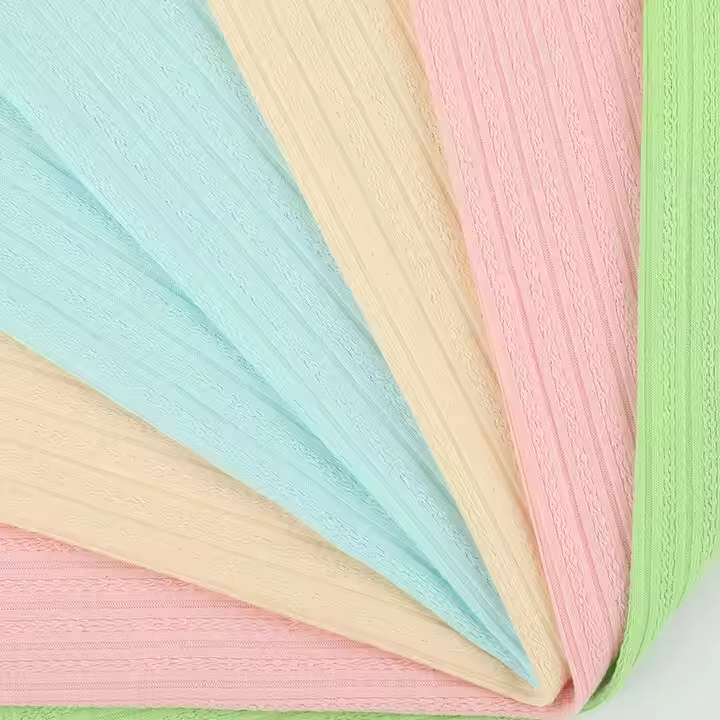
Your fashion choices have a significant impact on the environment. Bamboo fiber fabric is a premier sustainable option. It not only boasts superior ecological advantages but also provides unparalleled comfort. Choosing bamboo fiber contributes to a healthier textile lifecycle, making it a smart and responsible fashion choice. Demand for eco-friendly bamboo fiber is growing rapidly.
| Metric | Value |
|---|---|
| Market Size (2024) | 2,700 USD Million |
| Projected Market Size (2035) | 6.5 USD Billion |
| CAGR (2025-2035) | 8.4% |
Your focus on sustainable fashion is part of a larger trend. Over 60% of consumers want to buy eco-friendly products, and nearly 70% of Vogue readers consider sustainability when purchasing new clothes. Choose bamboo fiber fabric to perfectly align your wardrobe with your values.
Key Takeaways
- Bamboo grows rapidly and requires very little water and chemicals, making it environmentally friendly.
- Bamboo fiber fabric is soft to the touch, breathable, warm, and provides effective sun protection.
- Bamboo fiber fabric is very gentle on sensitive skin and inhibits bacterial growth, keeping clothes fresh.
- Bamboo fiber fabric is more environmentally friendly than cotton because it uses less water. It’s also more environmentally friendly than plastic clothing because it doesn’t generate plastic waste.
- Choose bamboo fiber fabric produced using lyocell fiber technology. Look for certification labels such as FSC and OEKO-TEX to ensure it’s truly environmentally friendly.
The Eco-Friendly Power of Bamboo Cultivation

Sustainable clothing originates from bamboo forests. Even before bamboo becomes soft fabric, you can feel its inherent environmental power. Bamboo cultivation has significant environmental advantages, setting a high standard for sustainability in the textile industry.
Rapid Growth with Minimal Resources
You might be surprised by how fast bamboo grows. It is one of the fastest-growing plants on Earth. This rapid growth cycle makes it a highly renewable and efficient resource, far superior to traditional materials like wood.
| Plant Type | Daily Growth Rate | Time to Full Size | Harvest Cycle |
|---|---|---|---|
| Bamboo | Up to 3 feet | 1 to 5 years | 3 to 5 years |
| Timber | N/A | At least 30 years | N/A |
This exceptional efficiency means you can get more material with less land. In fact, one acre of bamboo yields ten times more than cotton. Such high yields reduce the pressure of converting natural woodlands into farmland.
Note: Bamboo cultivation requires almost no human intervention. It grows naturally without pesticides or fertilizers, which helps prevent chemical runoff and reduce water pollution. This makes it an extremely clean and environmentally friendly crop.
A Champion of Carbon Sequestration
Your choice of bamboo fiber fabric helps purify the air. As a plant, bamboo is capable of effectively absorbing carbon dioxide (CO2) from the atmosphere. One hectare of bamboo forest can absorb more than 60 tons of CO2 per year. This is far higher than that of ordinary young forests, which absorb about 10 tons of CO2 per hectare per year. This process helps address climate change and improve the overall health of our environment.
Besides absorbing carbon, bamboo forests are also amazing oxygen factories. Different varieties of bamboo produce varying amounts of oxygen, but some varieties produce far more oxygen than trees. Bamboo’s powerful ability to absorb carbon dioxide and release oxygen makes it a key force in creating a healthier planet.

Enhancing Soil Health Naturally
Bamboo does more than just grow quickly; it actively improves the ground it grows in. Its complex and dense Bamboo not only grows rapidly but also effectively improves soil. Its complex and dense root system is highly beneficial to the environment. These roots firmly anchor the soil, making it ideal for preventing soil erosion, especially on slopes and degraded land.
The benefits of bamboo roots include:
- Soil stabilization: The dense root system forms a network that firmly holds soil particles, enhancing soil stability.
- Improved water permeability: The roots create tiny channels (macropores) in the soil. This helps rainwater seep into the soil, reducing runoff and thus lowering the risk of flooding and replenishing groundwater.
- Fertilized soil: As the roots and leaves decompose, they return valuable nutrients and carbon to the soil, naturally improving soil fertility.
Choosing bamboo fiber products supports a farming system that restores and protects the land. This commitment to soil health is at the heart of bamboo’s position as one of the best sustainable material solutions available today. The use of bamboo fiber promotes a healthy agricultural cycle from planting to harvest.
Why Bamboo Fabric is a Win for Your Wardrobe

Beyond its eco-friendly advantages, bamboo fiber fabric can significantly enhance your daily life. You’ll find that its unique properties provide a superior user experience compared to other textiles. These benefits of bamboo fiber directly translate into better comfort, performance, and a healthier feel, making it a smart choice for any wardrobe.
Unmatched Softness and Comfort
You’ll immediately feel the extraordinary softness of bamboo fiber fabric. Many compare its feel to a blend of silk and cashmere. Bamboo fibers are naturally rounded and smooth, unlike materials like wool which contain sharp fibers that can irritate the skin. This allows the fabric to glide gently over your body.
This incredible softness makes it ideal for intimate apparel. You can enjoy the luxurious experience of an ultra-soft bamboo fiber T-shirt or immerse yourself in the warm embrace of bamboo fiber bedding. The comfort of bamboo fiber is more than just a feeling; from dressing in the morning to sleeping under bamboo fiber bedding at night, bamboo fiber enhances your daily life. Choosing bamboo fiber T-shirts or bamboo fiber bedding means you’re prioritizing your personal comfort.
High-Performance Properties for Bamboo Clothing
Bamboo fiber clothing is not only soft and comfortable, but also a high-performance technological garment. This fabric possesses natural properties that keep you comfortable in any situation, a key reason for its growing popularity.
One of bamboo fiber’s most acclaimed properties is its superior temperature regulation. The tiny gaps within the bamboo fibers create a highly breathable fabric. This structure allows the fabric to adjust to your body’s needs.
- Warm Weather: The fabric quickly wicks away moisture from your skin, allowing sweat to evaporate rapidly. This moisture management feature can make you feel 3 degrees Celsius cooler than when wearing cotton clothing.
- Cold Weather: The same hollow fibers trap warm air around your body, acting as a natural insulation layer, keeping you warm without adding bulk. This excellent temperature regulation ensures comfort all year round.
Your bamboo fiber clothing also offers sun protection. The fabric’s dense weave naturally blocks harmful UV rays. Many bamboo fiber products achieve a UPF 50+ sun protection rating, the highest level of sun protection for clothing.
| UPF Rating | Protection Level | UV Blocked |
|---|---|---|
| 15-24 | Good | 93.3% – 95.9% |
| 25-39 | Very Good | 96.0% – 97.4% |
| 40-50+ | Excellent | 97.5% – 98%+ |
A UPF 50+ sun protection rating means this fabric allows only 1/50th of the sun’s UV radiation to penetrate. This makes bamboo fiber T-shirts ideal for outdoor activities. The inherent strength of bamboo also ensures the garment’s durability, allowing you to enjoy these benefits for years to come. This durability helps extend the overall lifespan of your wardrobe.
Natural Hypoallergenic and Antibacterial Qualities
Bamboo fiber is gentle on the skin, so you can use it with confidence. Its smooth fiber structure makes it naturally hypoallergenic. Unlike some fabrics that may cause irritation, bamboo fiber fabric is ideal for people with sensitive skin or allergies. This characteristic makes it a top choice for a variety of products, from bamboo fiber T-shirts to bamboo fiber bedding.
Furthermore, bamboo has excellent natural defense mechanisms. This plant contains a bioactive substance that inhibits bacterial growth. Bamboo fiber fabric retains this property, helping to keep clothing and home textiles fresh and clean for longer.
- Studies have shown that bamboo has antibacterial effects against common bacteria such as Staphylococcus aureus.
- This antibacterial property reduces odor-causing microorganisms.
This means your bamboo fiber T-shirts, towels, and bedding won’t need frequent washing to stay clean and fresh-smelling. You can confidently wear bamboo fiber clothing during workouts or wrap yourself in a bamboo fiber towel after showering, as the fabric effectively maintains your hygiene. Using bamboo fiber bedding also helps create a cleaner sleep environment.
Bamboo vs. Other Textiles in Sustainable Fashion
When building a sustainable wardrobe, fabric selection is crucial. The advantages of bamboo fiber compared to other common textiles are obvious. Its environmental benefits are clearly visible, making bamboo fiber fabric an ideal choice for environmentally conscious consumers. This makes it a cornerstone of eco-friendly fashion.
A Greener Choice Over Conventional Cotton
You might think of cotton as a natural choice, but traditional cotton cultivation has a significant environmental impact. Cotton cultivation consumes a large amount of water. Bamboo, which typically grows using only rainwater, is a more sustainable alternative.
| Water Type | Liters/kg of Conventional Cotton |
|---|---|
| Blue Water | Approx. 5,000-8,000 |
| Green Water | Approx. 3,000-6,000 |
| Grey Water | Approx. 10,000-20,000+ |
Beyond water, conventional cotton farming relies heavily on chemicals. This practice harms ecosystems and Besides water consumption, conventional cotton farming relies heavily on chemicals. This practice harms ecosystems and farm workers.
- It accounts for approximately 4% of global pesticide use.
- It accounts for approximately 16% of global insecticide use.
Choosing bamboo helps you avoid supporting these harmful agricultural practices and promotes a healthier planet.
The Natural Advantage Over Synthetic Fabrics
Your fashion choices can also help fight plastic pollution. Synthetic fabrics like polyester are essentially plastics. Your fashion choices also help combat plastic pollution. Synthetic fibers like polyester are essentially plastic. Every time you wear or wash them, they shed tiny plastic fibers called microplastics. These pollutants contaminate our waterways and food chain.
A significant study found that even recycled polyester can release more microplastics than new polyester, exacerbating the microplastic pollution problem.
Bamboo fiber fabrics offer a natural solution. Because bamboo is a plant-based material, it does not release microplastics. By choosing bamboo fiber fabrics, you are making a direct contribution to cleaning up the oceans and protecting the environment, and driving the fashion industry to adopt more responsible materials.
Understanding the End-of-Life Biodegradability
You should consider where your old clothes end up. How clothing is handled at the end of its life cycle is key to sustainable fashion. Bamboo fiber fabrics demonstrate their ultimate and crucial advantage here: biodegradability.
Pure bamboo fiber decomposes in composting environments within months, returning nutrients to the soil. This creates a true circular life cycle. In contrast, synthetic fiber fabrics like polyester can never truly biodegrade. Instead, they take hundreds of years to break down into harmful microplastics that persist in the environment for a long time. By choosing bamboo fiber fabrics, you are supporting a circular system where nature recycles these materials, leaving no waste. This commitment to the circular economy is crucial to the future of fashion.
How to Choose Genuinely Sustainable Fabric with Bamboo
Understanding how fabrics are produced is key to making the most sustainable choices. Not all bamboo fiber fabrics are created equal. The production method determines its true environmental impact. Learning to identify low-impact production processes is crucial for choosing truly sustainable bamboo fiber fabrics.
Decoding Production: Viscose vs. Lyocell
You should understand the two main methods for transforming bamboo into fabric: the viscose fiber process and the lyocell fiber process. The lyocell fiber process offers a more environmentally friendly production method. The viscose fiber process uses harmful chemicals such as carbon disulfide, which can endanger worker health and pollute water bodies. In contrast, the lyocell fiber process uses non-toxic solvents and employs a closed-loop system.
A closed-loop system is a major advantage for achieving sustainability. In the lyocell fiber process, over 99% of the solvent and water are recycled and reused, minimizing waste generation.
This table lists the key differences:
| Aspect | Bamboo Viscose | Bamboo Lyocell |
|---|---|---|
| Chemical Usage | Harsh chemicals (sodium hydroxide, carbon disulfide) | Non-toxic solvent (N-Methylmorpholine N-oxide) |
| Process Type | Open-loop system | Closed-loop system |
| Solvent Recovery | Low | Over 99% |
| Environmental Impact | Pollution risks | Minimal waste, eco-friendly production process |
Choosing bamboo fiber fabric produced using the Lyocell process means you support a cleaner and safer textile industry.
Essential Certifications to Look For
You can easily verify a product’s sustainability claims by checking authoritative certifications. These labels are your guide to choosing responsible bamboo products.
- Forest Stewardship Council (FSC): This certification guarantees that bamboo is harvested from responsibly managed forests. It ensures biodiversity conservation and worker rights.
- OEKO-TEX Standard 100: This label confirms that the final bamboo fiber fabric is free of many harmful substances. It tests for a variety of substances, from pesticides to sensitizing dyes, ensuring the product is safe for the skin.
Seeing these certifications gives you confidence in purchasing bamboo fiber fabric.
Partnering with Quality Suppliers like Suerte
Partnering with professional suppliers ensures consistent and reliable quality and a smooth supply chain. Experienced partners can help you tackle the complexities of bamboo fiber fabrics. For example, suppliers like Suerte offer a one-stop service from pattern design to production. With advanced machinery and expertise in various fabric types, including bamboo fiber knits and rayon blends, they can meet diverse customization needs such as digital printing and dyeing. Choosing a quality partner ensures your final bamboo fiber fabric meets high performance and durability standards. This partnership is crucial for creating exceptional bamboo fiber products.
You’ll find bamboo fiber fabrics standing out in the sustainable fashion world. Their environmentally friendly cultivation, superior comfort, and natural biodegradability make them an excellent choice. Choosing certified bamboo products allows you to make a positive impact on the environment. Support the growing trend of eco-friendly fashion by choosing brands committed to sustainability. Your fashion choices contribute to a better environment.
Many brands lead the way in eco-friendly fashion with responsible bamboo fabric.
- Terrera ensures all its products are free from harmful substances.
- Boody and Free Fly Apparel use certified organic bamboo.
- Cariloha partners with agencies that certify sustainable bamboo harvesting.
FAQ
How to care for bamboo fiber clothing?
Caring for bamboo fiber clothing is very simple. Gently machine wash in cold water. Avoid high temperatures when tumble drying. Air drying is best, but it can also be tumble dried on a low heat. Simple care will keep your garments soft and durable.
Is bamboo fiber fabric expensive?
You’ll find that bamboo fiber fabric is competitively priced compared to other high-quality fabrics. Its durability and long lifespan make it excellent value for money. Investing in bamboo fiber clothing means owning a high-quality, durable product that benefits both yourself and the planet—a worthwhile addition to your wardrobe.
Does bamboo fiber fabric wrinkle easily?
You’ll find that bamboo fiber fabric wrinkles less than cotton. While not completely wrinkle-free, wrinkles usually disappear with body heat. To keep items like bamboo fiber T-shirts crisp, use a steam iron or iron on a low heat.
Is all bamboo fiber fabric environmentally friendly?
You should choose bamboo fiber fabric produced using the Lyocell fiber process. This method uses non-toxic solvents and is carried out in a closed-loop system, making it highly sustainable. In addition, please check for certifications such as FSC and OEKO-TEX to ensure that you are buying a truly environmentally friendly product.