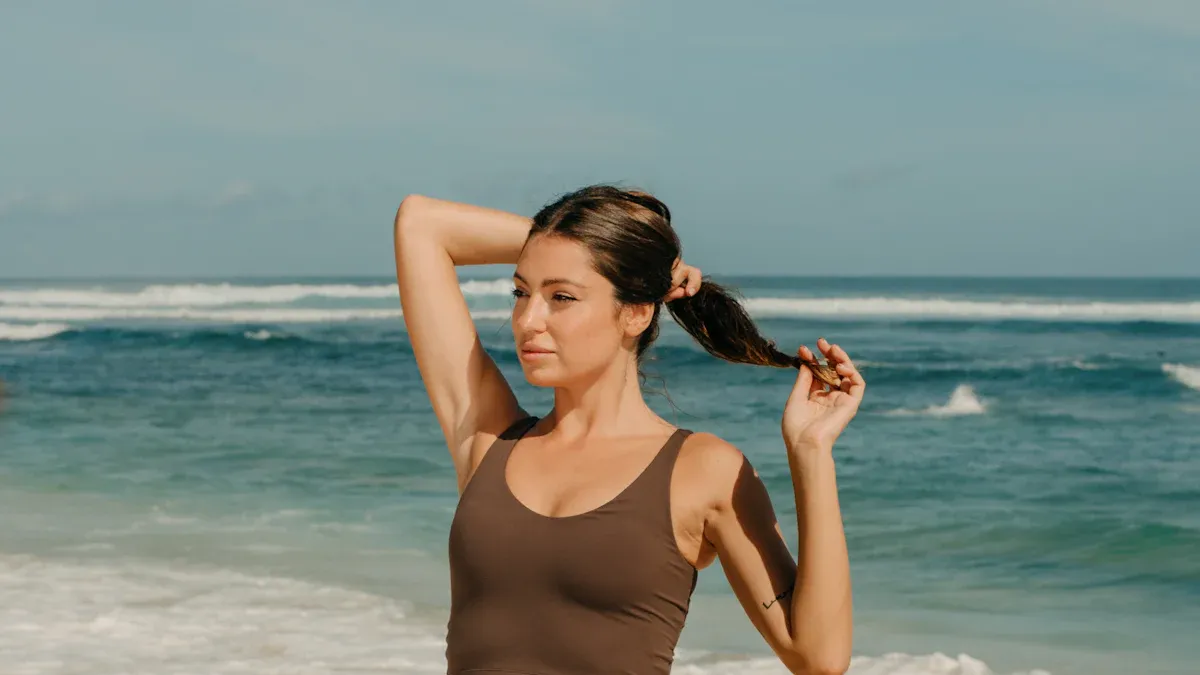
Stretch knit fabric is a soft knit material highly regarded for its exceptional elasticity. This fabric is comfortable to wear and suitable for everyday life. It moves with the body, making it ideal for everything from high-performance sportswear to the most comfortable t-shirts.
This unique combination of elasticity and softness allows for complete freedom of movement, making knit fabric a true wardrobe essential.
Key Takeaways
- Stretch jersey knit fabric is a soft knit material. It moves with the body and is comfortable to wear.
- This fabric is popular because of its excellent elasticity, soft touch, breathability, and ability to maintain its shape after stretching.
- Knit fabrics are widely used in a variety of items, including sportswear, everyday clothing such as t-shirts, and even bed sheets.
- When caring for knitwear, wash in cold water and air dry naturally. This helps extend the life of the garment and maintain its shape.
What Exactly Is Stretch Jersey Fabric?
To truly appreciate this material, you need to understand its unique construction. A stretchable jersey fabric is not just one type of material. It is a category of fabrics defined by how they are made and the fibers they contain. This construction is key to its famous stretch and comfort.
A Knit Fabric, Not a Weave
The most important thing to know about jersey fabric is that it is a knit. This sets it apart from woven fabrics like The most important point about knitted fabric is that it is a knitted fabric. This distinguishes it from woven fabrics such as denim or canvas.
- Woven fabrics use two sets of yarns (warp and weft) interlaced at right angles to form a stable, mesh-like structure.
- Knitted fabrics, such as plain knit, are made by weaving a continuous yarn into a series of interconnected loops. This loop structure gives the fabric its natural elasticity.
A history: Knitted fabrics have a long history. Originating in Jersey in the Channel Islands, local fishermen used it to make warm sweaters and underwear. Until 1916, it remained a practical fabric. Then, fashion designer Coco Chanel introduced it to the world of haute couture, completely changing its image.
A close look at a piece of knitted fabric reveals its knitted structure. The front, or “technical side,” has fine vertical lines that look like small “V” shapes. The back consists of horizontally arranged loops. It is this structure that makes the cut edges of a single layer of knitted fabric prone to curling.
Here is a simple comparison between knitted and woven fabrics:
| Feature | Knitting (Jersey) | Weaving (Denim) |
|---|---|---|
| Construction | Interlooping a single yarn | Interlacing two sets of yarns |
| Inherent Stretch | High, especially crosswise | Low (unless elastic is added) |
| Wrinkle Resistance | High | Low |
| Feel | Soft and flexible | Structured and firm |
| Cut Edges | Tends to curl or run | Frays easily |
Common Fiber Compositions
The feel and performance of a stretch jersey fabric depend heavily on its fiber content. Manufacturers blend different fibers to achieve specific characteristics, from athletic performance to everyday comfort. The quality of the final material often depends on getting this blend just right.
Cotton and Spandex Blends: This is the classic t-shirt material. Cotton provides softness and breathability. A small amount of spandex (usually 2-5%) adds excellent stretch and shape retention. This blend is perfect for comfortable, everyday garments that move with you.
Polyester and Spandex Blends: You will find this high-stretch fabric in most activewear. Polyester is durable, wrinkle-resistant, and fantastic at wicking moisture away from your skin. When blended with spandex, it creates a powerful stretch jersey that holds its shape, resists pilling, and keeps you dry during a workout.
Rayon or Modal Blends: For a more luxurious feel, you can turn to rayon or modal jersey. These semi-synthetic fibers, made from wood pulp, are known for their incredible softness and fluid drape. A rayon or modal jersey fabric feels silky against the skin, making it a popular choice for elegant tops, dresses, and high-end loungewear.
Expert fabric producers can work with a wide range of these compositions, using advanced techniques like digital printing and dyeing to create a custom jersey fabric for any need.
The Main Types of Jersey Fabric
Not all jersey is created equal. The two main types you will encounter are single jersey and double jersey. Their construction gives them very different properties and uses.
1. Single Jersey This is the most common type of stretchable jersey fabric. It is lightweight and has a clear right and wrong side, with the flat ‘V’ stitches on the front and loops on the back.
- Feel: Very soft, breathable, and drapes well.
- Stretch: Good stretch, especially in the width.
- Best For: T-shirts, tank tops, dresses, and baby clothes.
2. Double Jersey (Interlock) Double-knitted fabric, also known as interlocking fabric, has a more complex weaving process. It uses two sets of knitted fabrics, essentially weaving two layers of single-knitted fabric back to back. This process produces fabrics that are identical on both sides.
- Feel: Thicker, firmer, and more stable than single jersey.
- Stretch: Less stretchy but has good recovery.
- Best For: Polo shirts, structured dresses, skirts, and high-quality pants.
Because it is thicker and does not curl at the edges, double jersey offers a higher quality feel and is easier to sew. It provides more structure while still delivering that signature jersey comfort.
The Core Qualities: Why Is This Fabric So Popular?
The popularity of stretch knit fabrics stems from their unique combination of properties. These core characteristics work together to deliver exceptional comfort and reliable performance. You can truly feel the fabric’s athleticism, breathability, and skin-friendly feel.
Unmatched Elasticity and Shape Retention
The hallmark of stretch knit fabrics is their exceptional elasticity. This stretch gives you unparalleled freedom of movement. The fabric moves with your body, never restricting your motion. This is thanks to fibers like spandex, which can stretch several times their own length and quickly return to their original shape. This ensures your garments stay perfectly fitted all day, without sagging. High-quality knit fabrics, especially those rich in spandex, maintain their shape for longer, giving you confidence during exercise.
You can measure a fabric’s stretch with a simple formula:
((Stretched Length - Original Length) / Original Length) * 100. A higher percentage means more stretch and greater freedom of movement.
Superior Softness and Comfort
Knitted fabrics are renowned for their exceptional softness. Their looped knit structure creates a smooth surface with minimal friction. This design, combined with the fine yarns, gives knitted fabrics a soft, skin-friendly feel. The weight of the fabric also affects its wearing experience. Lightweight knitted fabrics drape beautifully, offering a comfortable and relaxed fit; while heavier fabrics provide a more structured feel. Both fabrics are designed to provide ultimate comfort. This pursuit of comfort makes knitted fabrics an ideal choice for everyday wear. Their superior quality makes them a truly comfortable option.
Breathability and Moisture-Wicking Properties
The knitted structure of knitted fabrics offers more than just elasticity. Tiny loops create minute gaps, allowing air to circulate freely. This gives knitted fabrics excellent breathability, preventing stuffiness. For sportswear, this breathability complements its moisture-wicking properties. High-performance materials like polyester-spandex knitted fabrics quickly draw sweat away from the skin and evaporate it to the fabric surface. This moisture-wicking property keeps you dry and comfortable during exercise. This superior moisture-wicking performance is a key reason why this fabric is the preferred choice for sportswear.
The Versatile Applications of Stretchable Jersey Fabric

The unique qualities of stretch jersey fabric make it incredibly useful. Its blend of comfort, stretch, and breathability gives it unmatched versatility. You can find this material in many different products. It serves roles in high-performance sportswear, comfortable clothes for everyday wear, and even household items. This versatility makes jersey fabric a true powerhouse in the textile world.
High-Performance Activewear
Stretch knit fabrics are the top choice for sportswear. Their superior performance helps you perform at your best. The fabric’s elasticity allows for freedom of movement during any activity. Therefore, it’s ideal for sportswear that needs to stretch without deforming.
High-quality sportswear must meet stringent performance standards. Polyester-spandex blended knit fabrics excel in this regard, offering excellent moisture-wicking properties to keep you dry. The table below illustrates its performance characteristics.
| Fabric Type | MVTR (g/m²·24h) | Wicking Speed (cm/min) |
|---|---|---|
| Poly-Spandex Jersey | 3,800 | 2.2 |
This data shows the fabric breathes well and pulls sweat away from your skin quickly. Durability is also key for jersey activewear. A quality jersey with 20% spandex can retain over 95% of its stretch recovery after 100 wash cycles. This ensures your garments maintain a perfect fit over time.
Different constructions of jersey fabric are suited for specific types of sportswear.
| Construction Type | Stretch Type | Recovery | Best Used For |
|---|---|---|---|
| Circular Knit Jersey | 4-way | High | Leggings, tanks, base layers |
You will find this versatile fabric in many popular activewear items, including:
- Sports bras and tanks
- Leggings and bike shorts
- Running tops
- Tracksuits
From a moisture-wicking base layer to supportive leggings, stretch jersey provides the performance you need.
Comfortable Everyday Fashion
The softness and stretch of jersey fabric make it a staple in everyday fashion. It delivers all-day comfort for a wide range of garments. This material is the foundation of modern sports and casual clothing. Its ability to drape Knitted fabrics are soft and stretchy, making them an essential item for everyday wear. They provide all-day comfort for a variety of garments. This fabric is the foundation of modern sportswear and casual wear. Its beautiful drape creates a relaxed yet flattering silhouette, making it ideal for creating comfortable clothing.
The applications of knitted fabrics in everyday wear are almost endless. You probably already have several knitted garments in your wardrobe. Common examples include:
- T-shirts and vests
- Hoodies and sweatshirts
- Dresses and skirts
- Polo shirts
- Pajamas and underwear
This fabric is ideal for everyday wear because it moves freely, doesn’t easily deform, and doesn’t feel restrictive. Whether for work, relaxing at home, or socializing with friends, knitted fabrics offer both style and comfort. Its versatility further highlights its exceptional adaptability.
Other Uses: From Loungewear to Linens
The benefits of stretch jersey extend beyond clothing. Its signature softness and easy-care nature make it a The advantages of stretch knit fabrics extend beyond clothing. Their unique softness and ease of care make them ideal for other products, especially loungewear and bedding.
For travel and leisure, certain types of knit fabrics offer even better performance. Bamboo fiber knit fabrics, with their soft and comfortable touch, are ideal for relaxation. Other special-purpose knit fabrics offer even more benefits. For example, some fabrics offer UPF 50+ sun protection, while others have antibacterial properties.
If you need comfortable, lightweight, and luxurious travel clothing, silk knit fabrics are an excellent choice. They perfectly combine all these advantages.
Knit fabrics are also increasingly favored by bed sheet lovers. Sleeping on a knit sheet is as comfortable as wrapping yourself in your favorite soft t-shirt. This versatile fabric brings numerous advantages to your bedding.
- Soft and Comfortable: The knitted structure creates a smooth and soft surface.
- Stretch Fit: Easily slips over thick mattresses and mattress covers.
- Wrinkle Resistant: The fabric’s natural elasticity keeps it smooth.
- Highly breathable: It promotes air circulation, keeping you cool and comfortable.
- Easy to care for: You can machine wash it with confidence.
Using knitted fabric for bed sheets transforms your bed into a comfortable place to rest. This proves that the applications of this fabric in comfort are endless, from sportswear to quality sleep.
How to Care for Your Jersey Garments
Proper care is essential to keep your stretch jersey garments looking and feeling great. Following a few simple guidelines will preserve the fabric’s signature softness, stretch, and shape. This ensures your favorite pieces maintain their high quality for years to come.
Washing and Drying Best Practices
Knitted fabrics can be easily maintained to their integrity with proper washing methods. Always choose a gentle wash cycle to protect the delicate knitted fibers.
- Wash garments in cold water, with a maximum temperature of 30°C (86°F).
- Use a mild liquid detergent and avoid harsh chemicals.
- Select a low spin cycle on your washing machine to prevent stretching and deformation.
Pro tip: For best results, air drying is the safest method. It is gentle on fibers, prevents shrinkage, and helps retain the fabric’s color.
If you must use a washing machine, select the lowest temperature setting, such as “low temperature tumble dry.” To prevent over-drying, remove garments while they are still slightly damp. For heavier items, lay them flat on a towel to dry. This helps knitted fabrics retain their shape.
Ironing and Wrinkle Prevention
One of the major advantages of knitted fabrics is their natural wrinkle resistance. However, if you need to iron out some wrinkles, using the right temperature is crucial. A proper temperature setting can protect the fibers from damage. For cotton-polyester blends, medium heat with a small amount of steam works well.
You should adjust the iron’s temperature according to the fiber content.
| Fabric | Recommended Iron Temperature |
|---|---|
| Polyester | 300°F (148°C) |
| Cotton | 400°F (204°C) |
Always check the garment’s care label first. When in doubt, start with a lower temperature to be safe.
Proper Storage to Maintain Shape
How you store your garments is just as important as how you wash them. Improper storage can cause stretching and distortion, especially in the shoulders.
To maintain the quality and shape of your jersey items, you should fold them neatly. Avoid hanging heavy knit sweaters or dresses. Folding prevents the weight of the fabric from pulling the garment out of shape over time. Store them in a drawer or on a shelf for best results.
Stretchable jersey fabric is a truly versatile knit. Its signature stretch, softness, and breathability define its appeal. The jersey fabric blends comfort with style, making it essential for both performance and daily life. You can find this quality material in everything from Suerte activewear to cozy loungewear. By understanding the properties of this jersey fabric, you can ensure your favorite pieces last for years.
The future of knitted fabrics is exciting. Innovations are primarily focused on recycled fibers and smart textiles, continuously pushing the performance limits of this stretch knitted fabric.
FAQ
What makes jersey fabric “stretchable”?
Jersey fabric gets its stretch from two key things. First, its looped knit construction gives it natural flexibility. Second, manufacturers often blend in elastic fibers like spandex. This combination allows the fabric to move with you and then return to its original shape.
Can I get a custom jersey fabric made?
Yes, you can create custom jersey fabric. Many suppliers offer one-stop services to help you. You can choose the base fabric, optimize a pattern design, and get physical samples for verification. This process helps you get the exact fabric you need for your project.
Why does my jersey t-shirt curl at the edges?
The edges of your t-shirt curl because it is likely made from single jersey fabric. The knit structure of single jersey naturally causes the cut edges to roll. This is a normal characteristic of this lightweight material.
Tip: If you want a fabric that does not curl, choose a double jersey or interlock knit. Its construction makes it more stable and thicker.
Is jersey fabric good for hot weather?
Yes, jersey is great for warm weather. Its knit structure creates tiny gaps that let air flow through, making it very breathable. For extra cooling, you can choose a polyester or bamboo blend. These materials are excellent at wicking moisture away from your skin.