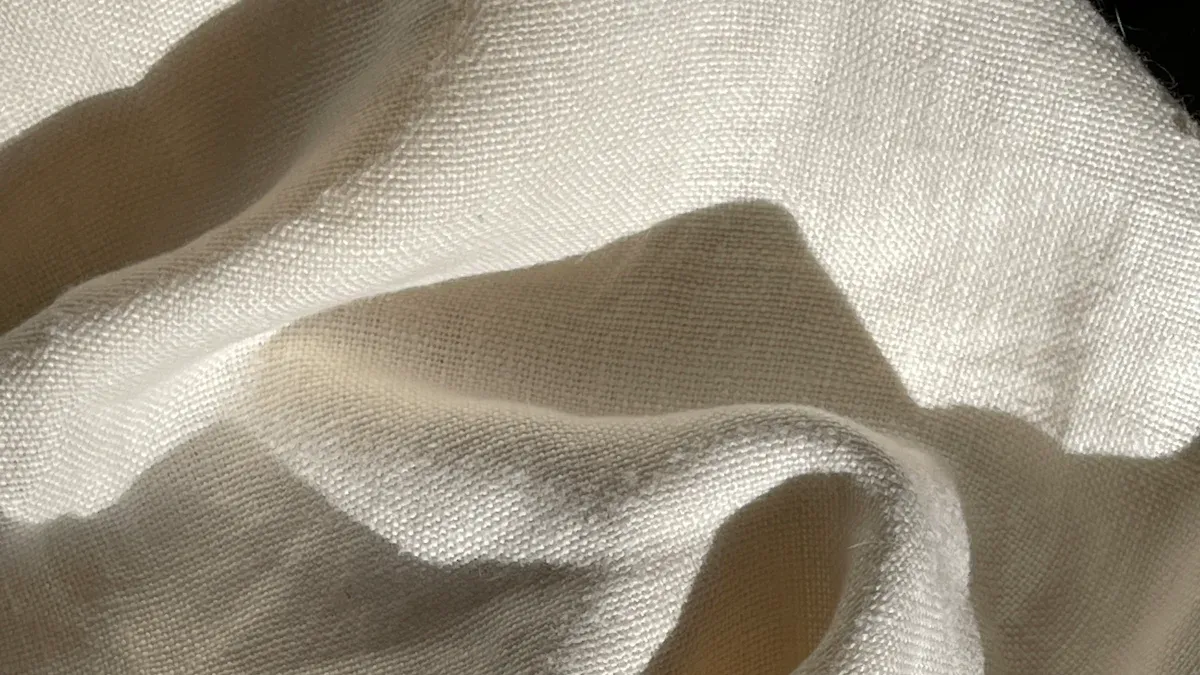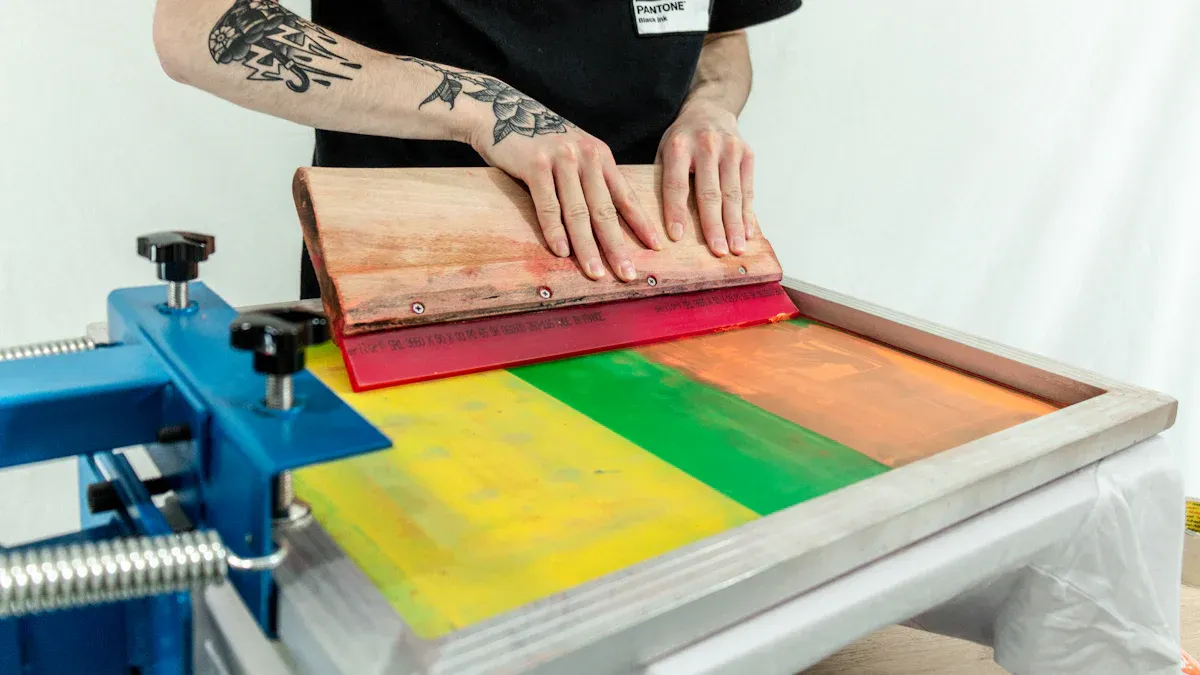
In 2025, printable mesh fabrics will unlock entirely new design possibilities. The screen-printable mesh fabric market reached $720 million in 2024 and continues to grow, driven by the demand for high-resolution printing and sustainability.
Explore new ideas for fashion, décor, and branding with printable mesh cloth fabrics, making your creativity the focus.
| Metric | Value |
|---|---|
| Market Valuation (2024) | USD 0.74 billion |
| Expected Valuation (2034) | USD 1.21 billion |
| CAGR (2025-2034) | 5.0% |
Screen printing and digital advancements give you professional results. With the right approach, you can bring your visions to life and make your next project stand out.
Key Takeaways
- Printable fabrics, with their breathability, flexibility, and durability, are ideal for fashion, home décor, events, and art installations.
- Advanced screen printing and digital technologies help create vibrant, durable, and highly detailed patterns on mesh fabrics.
- Mesh fabrics can support creative projects through layering, cutting, and combining materials, resulting in unique effects and personalized expression.
- Using the right tools and preparation, such as the appropriate mesh count and curing method, ensures high-quality printing results and prevents fabric damage.
- Suerte offers reliable, environmentally friendly mesh fabrics and professional support to help you achieve consistent, cost-effective, and sustainable results.
Printable Mesh Fabric: Properties and Advantages
Key Features and Benefits
Choosing printable mesh fabric for your next textile design project will offer numerous advantages. This material stands out due to its unique physical and chemical properties:
- The fabric’s roughness and flexibility allow inks to adhere well, resulting in high-quality prints.
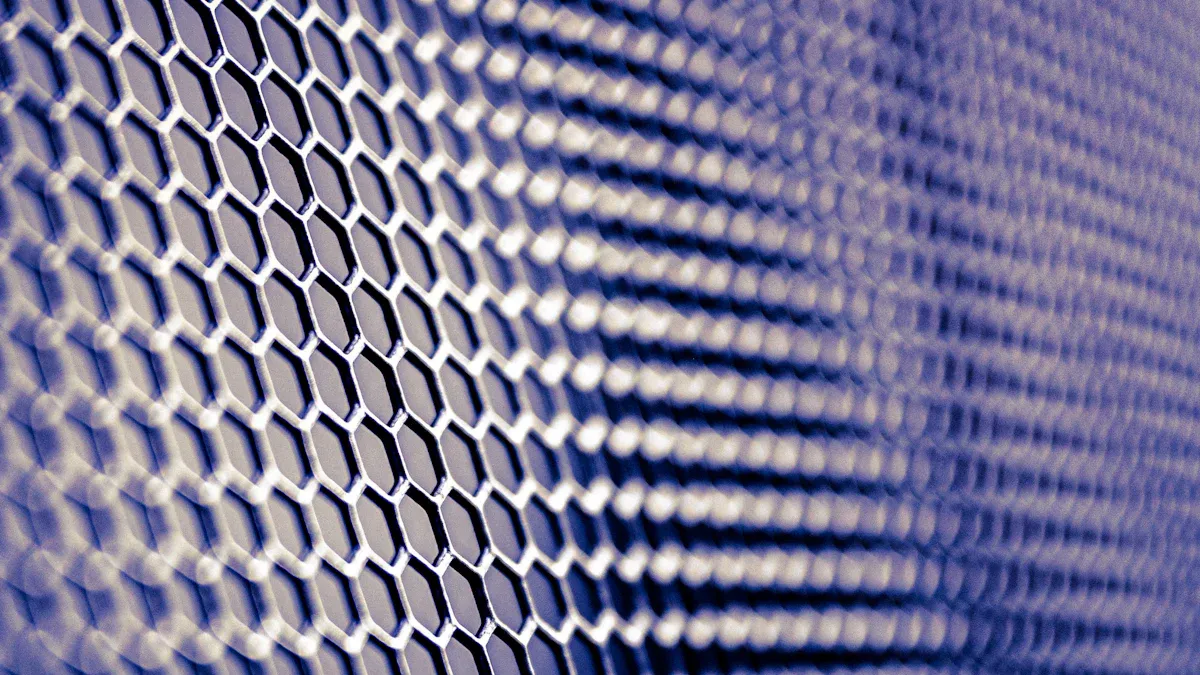
- Through selective ink deposition technology, the mesh structure remains open, allowing air to circulate and maintaining breathability.
- The mesh structure controls the amount of ink penetration, enabling the creation of thick or thin films as needed.
- This lightweight and flexible fabric is ideal for wearable electronics and sportswear.
- Chemical adhesives, such as acrylic polymers, help pigments adhere to the fabric, ensuring your designs remain vibrant and long-lasting.
- Special surface treatments, such as waterproof or antibacterial coatings, can further enhance performance.
A table below highlights some key features and their benefits:
| Features | Benefits |
|---|---|
| High strength and UV treatment | Long-lasting outdoor and indoor applications |
| Custom high-resolution printing | Detailed branding and marketing |
| Breathable mesh design | Comfort and moisture control |
| Flame retardant and water resistance | Safety and protection |
| Easy installation with grommets | Quick setup for events and displays |
Types of Printable Mesh Fabric
You can choose from a variety of printable mesh materials, each with unique textile design characteristics:
- Polyester-spandex blends offer elasticity, comfort, and a perfect fit, making them ideal for sportswear and compression garments.
- Knitted mesh fabrics can stretch in multiple directions and are wrinkle-resistant, perfect for flexible designs.
- Woven mesh fabrics offer good structure and are best suited for projects requiring less elasticity.
- Common fabrics for digital printing include loose-fitting knits, breathable and lightweight fabrics, and athletic mesh. These fabrics offer vibrant, durable prints, making them ideal for apparel and home décor.
Why Choose Mesh for Creative Projects
You’ll find printable mesh fabric particularly useful in creative projects because it:
- is breathable and lightweight, keeping your designs comfortable and cool.
- is flexible and easy to cut, shape, or layer, supporting a wide range of textile design ideas.
- it’s durable, UV-protective, and moisture-wicking, making it suitable for both indoor and outdoor use.
- it’s affordable and versatile, allowing you to use it for small crafts or large installations.
- its applications are broad, spanning fashion, home décor, and event branding.
Designers and artists frequently use mesh to create innovative effects such as tulle blouses, three-dimensional wall hangings, and practical accessories. The open structure and flexibility of mesh allow you to experiment and push the boundaries of textile design.
Innovative Applications for Printable Mesh Fabric in 2025
Fashion and Wearable Art
You can see how printable mesh fabric transforms the world of fashion and wearable art in 2025. Designers now use advanced 3D printing and mesh structures to create garments that blend technology with creativity. You find You can foresee how printable mesh fabrics will transform the world of fashion and wearable art by 2025. Designers are now leveraging advanced 3D printing technology and mesh structures to create garments that blend technology and creativity. You can find many innovative textile design concepts in recent collections:
- The Voltage collection by Iris Van Herpen and Julia Koerner: This collection uses selective laser sintering (SLS) to create delicate, lace-like mesh textures. The final result is a perfect fusion of fashion and technology, pushing the boundaries of textile design.
- Maria Alejandra Mora Sanchez’s Loom project: This project uses an FDM printer to print thermoplastic polyurethane. This elastic and adaptable fabric, inspired by Wayu indigenous textiles, combines comfort and flexibility.
- Jasna Rokegem’s Trypophilia collection: These garments use multi-material polymers to print flexible structures that reflect emotions directly onto the fabric.
- Ministry of Supply’s 3D-printed knitted blazer: This sustainable garment conforms to your body and reduces material waste by 35%. It combines comfort and durability.
- Danit Peleg’s all-3D-printed fashion collection: This collection demonstrates that you can create wearable, comfortable clothing entirely through 3D printing.
- Alexis Walsh’s dress: Made using selective laser sintering technology and 400 hand-assembled tiles, this dress showcases sophisticated design possibilities.
- Jessica Rosenkrantz’s dynamic dress: This dress, using 3D scanning and printing technology, perfectly conforms to your body and moves with your movements.
These projects demonstrate how to explore entirely new design possibilities using mesh materials and 3D printing technology. You can create garments that combine flexibility, sustainability, and visual impact. The open structure of mesh materials supports innovative textile design concepts, allowing you to freely explore the form, movement, and comfort of clothing.
Tip: When you work with printable mesh fabric in fashion, you can layer, cut, or combine materials to achieve unique effects. This approach encourages creativity and personal expression.
Interior Design and Home Decor
You can bring a fresh look to your living spaces with printable mesh fabric. In 2025, interior designers use mesh Printable mesh fabrics can refresh your living spaces. In 2025, interior designers will use mesh to add texture, depth, and sustainability to home décor. This trend is reflected in the use of layered textures, such as combining woven materials, mesh, and natural fabrics. These combinations can enhance the tactile and visual appeal of any room.
- Designers are incorporating mesh elements into cabinet doors and furniture. This design approach creates a softer, warmer space.
- Many design choices today follow circular and modular principles. You can repurpose and reuse mesh decorations, thus supporting sustainability.
- Handcrafted aesthetics and eco-friendly materials remain highly sought after. Printable mesh fabrics perfectly align with these trends, offering versatile and sustainable options for home décor.
You’ll also find that natural fiber-reinforced mesh fabrics contribute to environmentally friendly solutions. The table below shows how different natural fibers support sustainable and creative home décor:
| Natural Fiber | Source Plant | Sustainability Features | Uses in Home Decor and 3D Printing |
|---|---|---|---|
| Hemp | Hemp plant | Fast growth, biodegradable, lightweight, good strength | Eco-friendly products, artistic creations, prototypes |
| Flax | Flax plant | Biodegradable, renewable, naturally textured surface | Decorative and artistic prints, prototypes |
| Jute | Jute plant | Affordable, sustainable, biodegradable, high tensile strength | Packaging, home décor, eco-friendly goods |
| Bamboo | Bamboo plant | Fast-growing, renewable, wood-like appearance | Creative projects, ornamental prints, eco-conscious designs |
| Cotton | Cotton plant | Common textile fiber, smooth textile-like surface | 3D prints resembling fabric |
| Kenaf | Kenaf plant | Fast-growing, sustainable, biodegradable, good strength | Packaging, eco-friendly goods |
| Coconut (Coir) | Coconut husk | Strong, biodegradable, lightweight | Creative prints, natural aesthetic goods |
| Sisal | Sisal plant | Sturdy, strong, biodegradable | Eco-conscious designs, useful prototypes |
| Abaca | Abaca plant | Flexible, strong, biodegradable | Creative prints |
You can use these materials to create innovative textile design ideas that are both beautiful and environmentally responsible. Mesh fabrics made from these fibers reduce reliance on plastics and add natural textures and colors to your home.
Art Installations and Public Spaces
Printable mesh fabrics are frequently seen in art installations and public spaces, showcasing bold design styles. Artists and architects utilize mesh fabrics to create large-scale, visually impactful, and durable works.
- Eventscape Inc. designed a large-scale printable blackout textile installation for a shopping mall in the United States. This structure, composed of six loops of fabric, covers 468 square meters, perfectly conforming to the curvature of the ceiling and radiating a soft, gradient sheen of color.
- Anish Kapoor’s sculpture “Marsuas,” exhibited at Tate Modern, uses custom-patterned woven polyester PVC fabric. This installation, with its striking red form, dominates the Turbine Hall, demonstrating how mesh materials can transform space.
- Duvall Design Inc. specializes in mesh structures for outdoor and indoor spaces, including shading elements and trade show interiors.
- Transformit Inc. uses stretch lining fabrics and mesh to create textile art installations and three-dimensional spaces, such as the Head First! Theater in Cleveland, Ohio.
You will benefit from advanced printing technologies such as UV-LED curing inks and thermal sublimation. These methods allow for vibrant, durable patterns on mesh, making your public art both eye-catching and long-lasting. Mesh is breathable, reducing drag and preventing tearing. This property makes it ideal for outdoor installations, where durability and visual impact are paramount.
You can use printable mesh fabric to bring your design ideas to life in public spaces. The material’s flexibility and strength support creativity and ensure that your work remains attractive over time.
Event Decor and Branding
You can transform any event space with printable mesh fabric. In 2025, event planners and marketers rely on this material to create bold, memorable branding and decor that stands out in any environment. Mesh fabric offers a unique combination of durability, flexibility, and visual impact, making it a top choice for both indoor and outdoor events.
Why Mesh Fabric Leads in Event Decor and Branding:
- Mesh banners are ideal for outdoor environments. The tiny perforations in the fabric allow wind to pass through, preventing damage and keeping displayed content intact in unpredictable weather.
- You’ll often see mesh banners around construction site fences, outdoor festivals, and stadiums. These locations require tear-resistant and fade-resistant materials.
- Mesh fabric is lightweight and easy to install, covering large areas such as fences or building facades without the need for heavy equipment.
- Mesh banners and wrapping films are UV resistant and weather-resistant. Even after days of sun and rain, your designs will remain vibrant and new.
- Digital printing technology allows you to add high-resolution images, logos, and even QR codes. This high degree of customization enhances brand awareness and audience engagement.
- Environmentally friendly mesh materials contribute to sustainable event planning and meet modern environmental standards.
Common Applications for Mesh Fabric in Events:
- Custom banners and fencing strips
- Promotional flags and feather flags
- Sports event packaging and stadium branding
- Travel exhibition displays and booth backdrops
- Crowd control fencing with branded logos
Tip: Use mesh banners for windy outdoor venues. The airflow prevents rips and keeps your branding looking sharp throughout the event.
Creating Interactive and Memorable Experiences:
You can enhance attendee engagement by screen printing on mesh fabric, offering on-site customization. Event planners often set up on-site printing stations at music festivals, sporting events, and trade shows. You can print your brand logo or event graphic on T-shirts, hats, hoodies, or tote bags. This creates unique merchandise and encourages guests to engage with your brand.
Screen printing on mesh fabric allows for rapid production. You can produce hundreds or thousands of customized items with no minimum order quantity. The process handles a wide range of colors and designs, giving you complete creative freedom for each event. This flexibility makes mesh fabric ideal for events on a budget or those requiring multiple locations.
Enhancing Brand Visibility and Engagement:
Digitally printed mesh patterns enhance the visual appeal of your event. You can apply these patterns to tents, banners, flags, and crowd control fencing. Water-resistant and weather-resistant inks ensure your displays remain vibrant even outdoors. Printed tents and banners are more eye-catching than plain ones, attracting crowds and increasing brand exposure.
Mesh fabrics can also create a softer, warmer atmosphere. You can use them to divide spaces, guide the flow of people, or add color and texture to large venues. This encourages guests to explore, interact, and remember your brand long after the event.
Key Benefits Table:
| Feature | Benefit for Events and Branding |
|---|---|
| Wind-resistant mesh | Reliable outdoor displays |
| High-resolution digital printing | Custom, vibrant graphics |
| Lightweight and easy to install | Fast setup and removal |
| UV and weather resistance | Long-lasting color and durability |
| Eco-friendly options | Supports sustainable event planning |
| Flexible for live customization | Engages attendees with branded merch |
You can rely on printable mesh fabric to deliver professional, durable, and visually striking results for any event. Whether you need to brand a stadium, decorate a festival, or create interactive experiences, mesh fabric gives you the tools to make your event unforgettable.
Screen Printing and Customization Techniques
Design Tips for Mesh Fabric
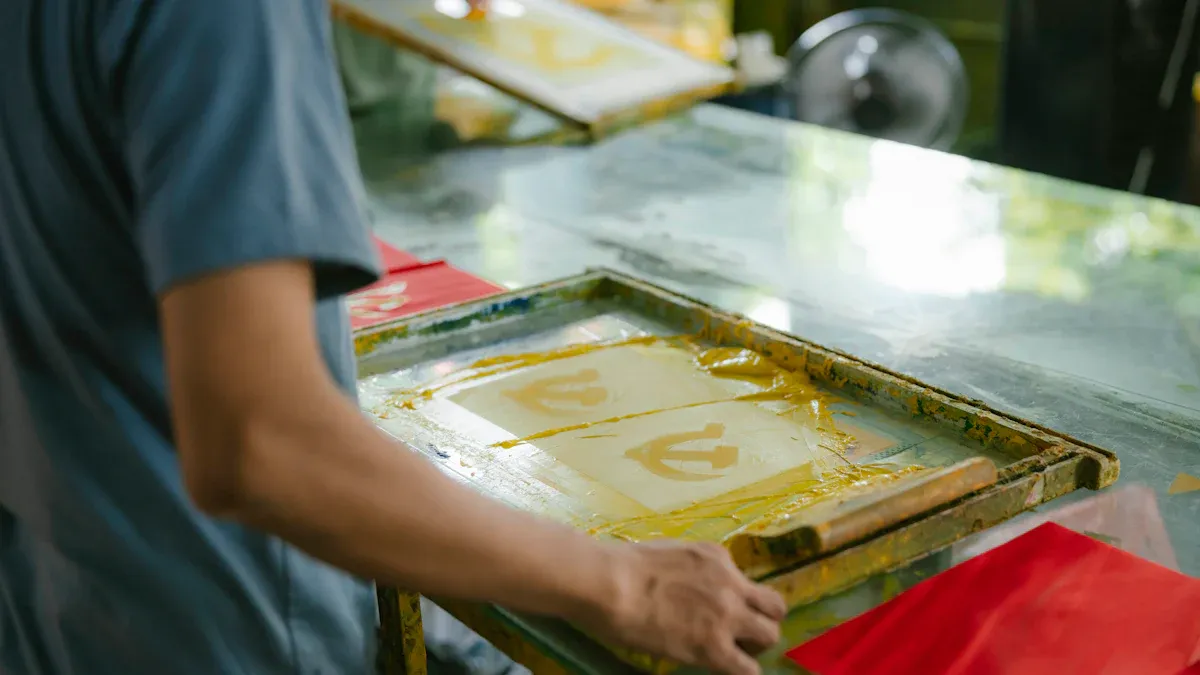
You achieve the best results with mesh fabric by following a clear process. Screen printing requires careful To achieve optimal results using screen printing, follow a clear operating procedure. Screen printing requires careful preparation and attention to detail. First, choose the appropriate mesh count. Lower mesh counts are suitable for thicker inks and bold designs, while higher mesh counts are better for finer details and thinner inks. Be sure to clean the screen and apply the photosensitive emulsion evenly in low light. Expose the screen to strong light to create a precise stencil. Rinse the screen until the design is visible, then secure it smoothly with tape or clips.
Align the screen with the fabric, pour ink around the design, and then squeegee at a 45-degree angle. Apply even pressure to allow the ink to pass through the mesh. Carefully lift the screen and allow the print to dry. For a more durable effect, you can use a heat press or iron to cure it. Clean the screen immediately after printing for future use.
Tip: Before starting, test your design on a discarded screen. This step helps you adjust the ink flow and pressure for best results.
For best results, design your work at 200 dpi resolution and 100% scale. Use the RGB color space and sRGB IEC61966-2.1 color profile in your editing software. If trimming space is needed, add extra white areas or borders, as mesh fabrics often leave small white edges when cut. Choose the appropriate binding method based on the fabric weight to prevent wear. Double-fold binding with straight stitching is suitable for lightweight or medium-weight fabrics, while single-fold binding is suitable for heavier fabrics.
The properties of mesh fabric will affect your design process. Polyester mesh is durable and quick-drying, making it ideal for sportswear. Cotton mesh is soft and breathable, but slightly less durable. The open weave of mesh fabric will affect the level of detail you can achieve. Larger pores may limit the rendering of fine details, so clean, simple designs are generally best suited for screen printing.
Print Resolution and Color Choices
Setting the print resolution to 200 dpi ensures clear and vibrant colors. At this resolution, scale the image to 100% to avoid quality loss. Using the RGB color space and an sRGB IEC61966-2.1 profile yields the most accurate colors. TIFF files are best suited for multi-color designs, while JPEG files are suitable for simpler images.
The choice of printing method affects print quality and durability. Screen printing produces vibrant, uniform, and opaque colors that remain durable even after multiple washes and wear. This method is particularly suitable for mesh fabrics, especially for large-volume orders and situations requiring printed patterns. Heat transfer also produces striking, durable patterns and works well on sturdy mesh fabrics. Heat transfer can achieve fine, fade-resistant patterns on a variety of fabrics. Vinyl printing supports complex multi-layer designs and offers excellent durability, making it popular in the sportswear industry.
| Printing Method | Quality Characteristics | Longevity and Durability on Mesh Fabric | Notes on Suitability for Mesh Fabric |
|---|---|---|---|
| Screen Printing | Vibrant, consistent, opaque colors | Extremely durable; withstands frequent washing and wear | Ideal for mesh; cost-effective for bulk orders |
| Plastisol Transfers | Bold, durable prints | Durable and suitable for heavy use | Good for robust mesh; eco-friendly options available |
| Direct-to-Garment | High detail and color vibrancy | Prints may fade faster than screen prints | Less durable on mesh |
| Pigment Ink Digital | Surface-based, eco-friendly | Susceptible to damage from rubbing and washing | Better for lighter colors; less durable on mesh |
| Heat Transfer | Detailed, consistent designs | Durable and fade-resistant | Flexible for various fabrics |
| Vinyl Printing | Fade-resistant, robust prints | Very durable; suitable for complex patterns | Ideal for sportswear; slower production |
| Dye Sublimation | Vivid, long-lasting prints | Limited to synthetic fabrics like polyester | Not suitable for cotton or natural fiber mesh |
The mesh count of a screen also affects the vibrancy and accuracy of printed materials. Lower mesh counts allow more ink to pass through, resulting in vibrant colors and even coverage. Higher mesh counts are better suited for using thinner inks and intricate designs, minimizing ink bleeding and achieving a clearer print. For CMYK printing, higher mesh counts better capture details and smooth gradations. Note that some vibrant or fluorescent colors may not render perfectly in CMYK mode, so adjust your design expectations accordingly.
Finishing Options for Durability and Style
Appropriate finishing processes can enhance the durability and style of fabrics. Suerte offers a variety of options to elevate the quality of your printed mesh fabrics. Embroidery gives fabrics an elegant and refined look, especially suitable for lightweight, stretchy mesh fabrics. Flocking and jacquard weaving techniques create intricate patterns and textures. Sequin embellishments provide a shimmering shine and a dynamic texture, ideal for costumes and evening gowns. Glitter and metallic finishes create a highly decorative, fashionable, and edgy effect.
You can choose from a variety of binding options. You can retain the fabric’s original white, unprinted binding for easy trimming, or choose “trim along the line” for a neat edge. Binding options include overlock and folded binding. Lightweight or frayed fabrics are best suited for double folds and straight stitching, while heavier or less prone to fraying fabrics are better suited for single folds.
Digital printing technologies, such as sublimation printing, permanently fix the design onto the synthetic mesh, ensuring long-lasting and vibrant prints. Pigment printing applies dyes directly to natural fabrics, resulting in a softer feel. Heat setting and chemical finishing improve dimensional stability, shrinkage resistance, and flexural strength. UV-resistant finishing prevents fading, making polyester mesh ideal for outdoor applications. Antibacterial and flame-retardant finishing add functional value for applications where safety is critical or high-frequency use.
| Aspect | Effect of Finishing Techniques |
|---|---|
| Feel and Texture | Finishing alters softness and smoothness; high filament count and finishing can soften polyester mesh |
| Durability and Stability | Heat setting and chemical finishes improve dimensional stability and shrinkage resistance |
| Environmental Resistance | UV resistant finishes prevent fading; ideal for outdoor applications |
| Functional Properties | Antibacterial and fire-retardant finishes enhance safety and hygiene |
| Surface Treatments | Plasma, flame, and corona treatments improve coating adhesion and performance |
Note: The right finishing options not only protect your printed mesh fabric but also help you achieve a professional, stylish result that stands out in any application.
Recommended Products and Tools, Including Suerte
When you want to achieve the best results with mesh fabric, you need reliable products and advanced tools. In 2025, you have access to a range of options that support professional screen printing and customization. Suerte stands out as a top choice for creative professionals and brands who demand quality, speed, and flexibility.
Essential Products for Screen Printing on Mesh Fabric
- Suerte Mesh Fabric: You can select from polyester knit, bamboo knit, and rayon blends. These fabrics offer breathability, stretch, and durability. They work well for sportswear, uniforms, and custom apparel.
- High-Resolution Digital Printers: Suerte uses advanced digital printing machines with pigment-based inks. These printers reach resolutions between 2400 and 4800 DPI. You get vivid, fade-resistant designs that last.
- Screen Printing Frames and Screens: Choose aluminum or wood frames for stability. Select mesh counts that match your design needs. Lower mesh counts suit bold graphics. Higher mesh counts capture fine details.
- Professional Squeegees: Use squeegees with firm rubber blades. They help you apply even pressure and achieve crisp prints on mesh fabric.
- Quality Inks for Screen Printing: Water-based and plastisol inks both work well. Water-based inks provide a soft feel. Plastisol inks offer durability and vibrant color.
- Heat Press Machines: Cure your prints for long-lasting results. Heat presses ensure ink bonds to the mesh fabric and resists washing.
- Emulsion and Exposure Units: Coat your screens with light-sensitive emulsion. Use exposure units to create sharp stencils for your designs.
- Cutting Tools and Finishing Equipment: Rotary cutters, fabric scissors, and hemming machines help you finish your projects with precision.
Tip: Always test your screen printing setup on a sample piece of mesh fabric. This step helps you adjust ink flow, pressure, and curing time for the best outcome.
Why Suerte Leads in Mesh Fabric Printing
You benefit from Suerte’s advanced production infrastructure. The company uses imported machinery and maintains an independent workshop. This setup ensures consistent quality and high-volume output. You can rely on Suerte for:
- Cost Control: Suerte offers low-cost solutions that deliver impressive visual effects. You can manage your budget without sacrificing quality.
- Design Support: The team helps you solve challenges like color matching and pattern alignment. This support increases your order success rate.
- Sample Verification: You receive multi-color, multi-size, and multi-process samples. This approach reduces your decision-making risk.
- Quick Response: Suerte completes sample proofing in 3-5 days. You can respond quickly to market trends and urgent orders.
- One-Stop Service: From pattern design to fabric selection and production, Suerte covers every step. You save time and streamline your workflow.
- Customization Options: Choose from a wide range of colors, patterns, and finishes. Suerte’s digital printing technology ensures high resolution and color stability.
- Quality Control: The company performs visual inspections and colorfastness tests. You receive reliable, consistent products every time.
Tools and Accessories for Professional Results
| Tool/Accessory | Purpose | Benefit for Screen Printing |
|---|---|---|
| Aluminum Screen Frames | Hold mesh fabric taut | Prevents distortion and ensures detail |
| High Mesh Count Screens | Capture fine details in designs | Ideal for screen printing art |
| Squeegees (various sizes) | Spread ink evenly across the screen | Achieve sharp, clean prints |
| Exposure Units | Harden emulsion for stencil creation | Enables precise screen printing |
| Heat Press | Cure ink and set designs | Increases print durability |
| Rotary Cutters/Scissors | Cut mesh fabric cleanly | Supports accurate finishing |
| Color Management Tools | Match and control color output | Ensures color accuracy |
You can combine these tools with Suerte’s mesh fabric to produce professional-grade screen printing results. The right equipment helps you maintain quality and efficiency, whether you create custom uniforms, event banners, or screen printing art.
Professional Insights for 2025
Professional printers trust Suerte for its consistent quality and fast delivery. Suerte’s mesh fabrics are breathable, stretchy, and moisture-wicking, making them a reliable choice. These properties are crucial for high-performance sportswear and casual wear. Suerte’s expertise in digital printing, dyeing, and embroidery enables the creation of vibrant, durable designs. Numerous teams and brands entrust Suerte with custom projects requiring unique colors, patterns, and processes.
You will also benefit from Suerte’s commitment to innovation and sustainability. The company aligns with 2025 market trends by providing environmentally friendly materials and efficient production processes. You can create products that meet both creative and environmental goals.
Note: Many brands test Suerte’s fabrics before placing large orders. This practice reflects the trust professionals place in Suerte’s quality and reliability.
When you choose the right products and tools, you unlock the full creative potential of mesh fabric. Suerte gives you the flexibility, quality, and support you need to succeed in screen printing and customization.
Overcoming Challenges with Printable Mesh Fabric
Handling and Cutting Techniques
You need to handle mesh fabric with care to get the best results in screen printing. Mesh fabric can shift or stretch if you do not secure it properly. Always lay your fabric flat before you start. Use weights or clips to keep the fabric in place. When you cut mesh, use sharp scissors or a rotary cutter. This helps you avoid frayed edges and keeps your screen printing area clean.
If you want straight lines, use a ruler as a guide. Mark your cutting lines with tailor’s chalk. For curved shapes, move the fabric slowly and keep your hand steady. You can also use a cutting mat to protect your work surface. After cutting, check the edges. If you see loose threads, trim them before you move to the screen printing step.
Tip: Practice on a scrap piece of mesh before you cut your main fabric. This helps you get used to the feel and stretch of the material.
Preventing Shrinkage and Distortion
You can prevent shrinkage and distortion by preparing your mesh fabric before screen printing. Wash and dry the fabric to remove any sizing or chemicals. This step helps you avoid surprises after printing. Always use gentle cycles and cool water. High heat can cause the mesh to shrink or lose shape.
When you stretch the fabric on the screen, do not pull too tight. Too much tension can distort the weave. Use even pressure to keep the mesh flat. After printing, let the fabric air dry. Avoid wringing or twisting the mesh. If you need to iron, use a low setting and place a cloth between the iron and the mesh.
A simple checklist for you:
- Pre-wash and dry mesh fabric
- Use gentle cycles and cool water
- Stretch fabric evenly on the screen
- Air dry after screen printing
- Iron with care if needed
Ensuring Color Accuracy and Print Quality
You want your screen printing colors to look bright and true. Start by choosing high-quality inks made for mesh fabric. Test your colors on a small piece before you print the full design. This helps you see how the ink reacts with the mesh and the screen.
Keep your screen clean and free of old ink. A dirty screen can cause color mixing or faded prints. Use the right mesh count for your design. Fine details need a higher mesh count, while bold designs work with lower counts. Always check your screen for holes or damage before you start.
Note: Good lighting helps you spot mistakes early. Work in a well-lit area to catch any color issues during screen printing.
If you want consistent results, use the same screen printing setup each time. Record your ink mixes and screen settings. This makes it easy to repeat your best prints. Clean your screens after each use to keep your prints sharp and your colors accurate.
You unlock creative freedom when you use printable mesh fabric in your projects. The screen gives you control over every detail. You can explore new ideas with screen printing and achieve professional results. The screen supports vibrant colors and sharp images. You adjust the screen for different effects. You select the right screen for each design. You prepare the screen carefully. You align the screen with precision. You press ink through the screen for bold prints. You finish your work with confidence. Let screen printing and mesh fabric inspire your next project.
Embrace experimentation. The screen is your tool for innovation.
FAQ
What types of projects work best with printable mesh fabric?
You can use printable mesh fabric for fashion, sportswear, event banners, home decor, and art installations. The fabric’s flexibility and breathability make it ideal for both creative and functional applications.
How do you maintain color vibrancy on mesh fabric?
You should use high-quality inks and proper curing methods. Always test your colors before full production. Store printed mesh away from direct sunlight to prevent fading.
Can you wash printed mesh fabric?
Yes, you can wash printed mesh fabric. Use cold water and gentle cycles. Avoid harsh detergents and high heat. Air drying helps maintain the fabric’s shape and print quality.
What tools do you need for screen printing on mesh fabric?
You need a screen printing frame, squeegee, high-quality inks, and a heat press. Sharp scissors or rotary cutters help you cut the fabric cleanly. Proper tools ensure professional results.
Does Suerte offer eco-friendly mesh fabric options?
Yes, Suerte provides eco-friendly mesh fabrics. You can choose from bamboo, recycled polyester, and other sustainable materials. These options help you meet environmental goals for your projects.