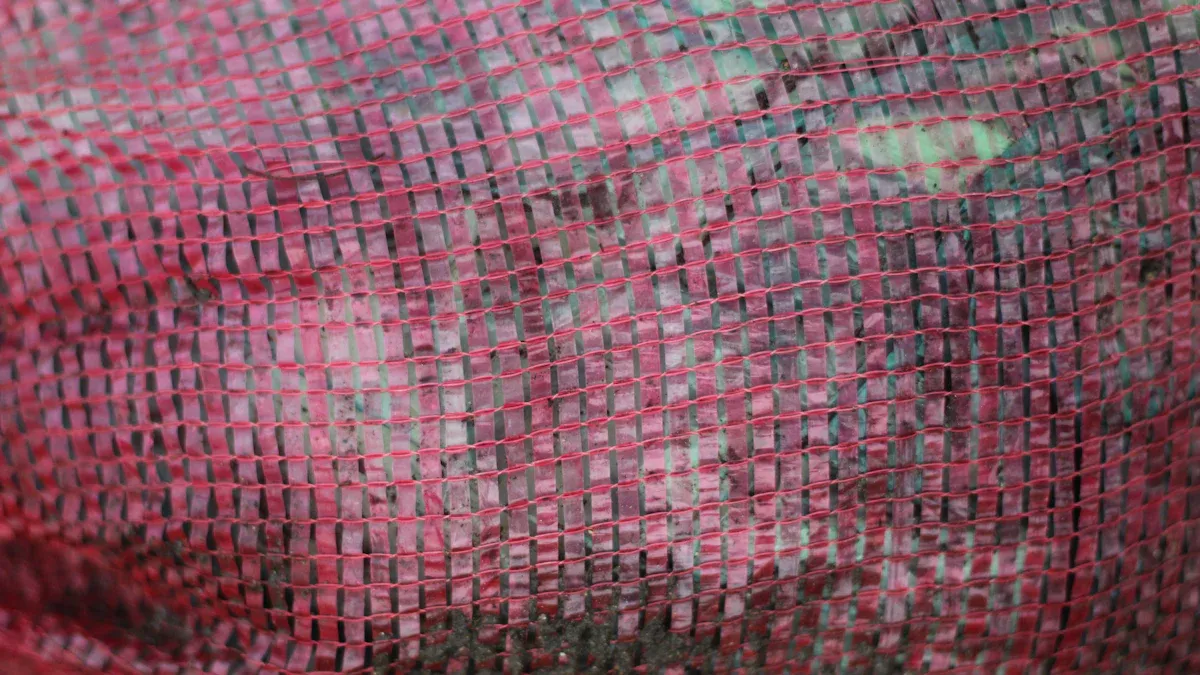
You trust mesh fabric for your favorite outdoor gear because of its unparalleled versatility. This highly breathable fabric allows air to circulate freely, wicking away moisture to keep you cool and comfortable during camping, hiking, and sports. Scientific research shows that mesh fabric’s excellent breathability adapts well to changing weather, offering both protection and comfort. Its lightweight design makes your gear easy to carry, while the durable fibers withstand harsh outdoor conditions. You’ll love these versatile fabrics that make every adventure more exciting.
- Many outdoor activities benefit from mesh netting:
- Camping and hiking
- Outdoor rest stops
- Portable inflatable mats for comfort
- Sports and casual wear
Key Takeaways
- Mesh cloth fabric allows air to circulate and moisture to escape, keeping your body cool and dry for greater comfort during outdoor activities.
- This material is lightweight, durable, and quick-drying, making your gear easy to carry and able to withstand harsh environments.
- The mesh fabric’s excellent flexibility and stretch allow it to adapt to various movements, helping you stay comfortable while hiking, running, or camping.
- Mesh fabric is widely used in outdoor products such as backpacks, tents, clothing, shoes, and packing supplies, improving breathability and convenience.
- Proper care, such as gentle washing and timely repairs, helps maintain the durability of mesh gear, keeping it ready for any adventure.
Key Properties of Fabric Mesh Netting Material in Outdoor Gear
What Makes Mesh Special for Outdoor Use
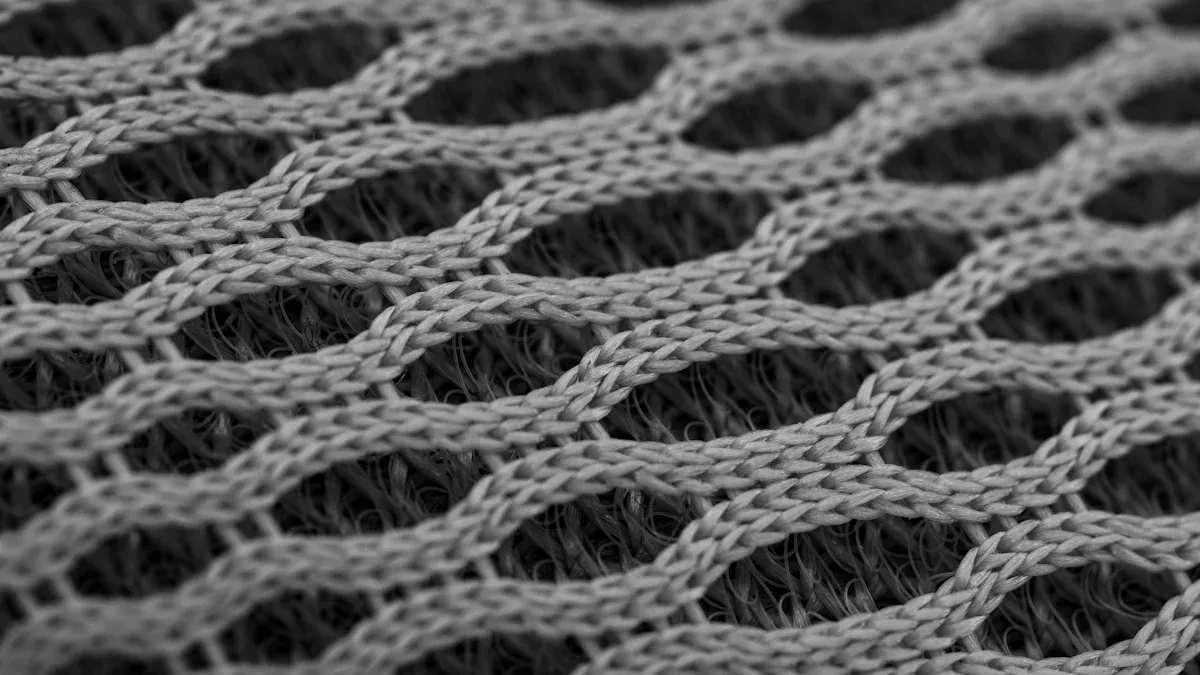
Choosing mesh fabric for outdoor gear will make a lasting impression. Mesh fabric stands out for its unique open-knit structure. This design allows air to circulate freely, keeping you cool and comfortable even in hot weather. Made from materials like polyester and nylon, mesh fabric is waterproof, UV-resistant, and abrasion-resistant. This lightweight yet strong fabric is resistant to stretching, sagging, or tearing. Mesh fabric dries quickly, is mildew-resistant, and easy to clean and care for. These properties make mesh fabric a smart choice for outdoor adventures.
- Open-knit structure provides excellent airflow and breathability.
- Using durable materials like polyester and nylon for enhanced strength and abrasion resistance.
- Lightweight and flexible, yet strong and tear-resistant.
- Quick-drying and moisture-wicking to prevent mold growth.
- Easy to clean and maintain, durable.
Main Characteristics of Mesh Netting Material
Mesh fabric offers several key properties to enhance your outdoor experience. Breathable mesh fabric features evenly distributed pores that promote airflow and keep you dry. Polyester mesh fabric offers excellent water and UV protection, while nylon mesh fabric is more durable. The elasticity and flexibility of mesh fabric allow for freedom of movement. Moisture-wicking properties help keep you comfortable and dry, and are also easy to clean. The breathable structure of mesh fabric ensures you stay cool and dry even during vigorous activity.
- Breathable mesh fabric, open structure, promotes airflow
- High durability and abrasion resistance
- Water and UV protection, especially in polyester mesh
- Elasticity and flexibility for comfort and freedom of movement
- Moisture wicking prevents mold growth
How Mesh Compares to Other Outdoor Fabrics
The advantages of mesh fabric compared to other outdoor fabrics are obvious. The breathability of mesh distinguishes it from solid fabrics that tend to trap heat and moisture. Mesh fabrics are lightweight, making it easy to carry gear. Its quick-drying and moisture-wicking properties help you stay comfortable in changeable weather. The table below shows how aperture and weave pattern affect the performance of mesh fabrics:
| Aspect | Effect of Pore Size (e.g., 100 Micron) | Effect of Weave Pattern (Plain vs Twill) |
|---|---|---|
| Filtration Efficiency | Smaller pores enable finer filtration, crucial for particle separation and purity. | Plain weave provides a stable, level surface ideal for general filtration; twill weave adds diagonal threads for enhanced strength and durability, suitable for heavy-duty filtration. |
| Strength & Durability | N/A | Twill weave offers greater strength and wear resistance compared to plain weave, making it better for demanding applications. |
| Flexibility | N/A | Plain weave is more adaptable and flexible; twill weave balances flexibility with added robustness. |
| Outdoor Suitability | Smaller pores maintain filtration precision under outdoor conditions. | Coated meshes (e.g., polyurethane or vinyl) improve resistance to UV rays, chemicals, and wear, extending lifespan and maintaining performance outdoors. |
| Breathability & Comfort | Smaller pores may reduce airflow but improve filtration; balance needed. | Weave pattern influences air circulation; mesh fabric’s breathability and lightweight nature improve comfort by reducing heat and moisture buildup. |
If you want lightweight, durable, and comfortable gear, mesh fabric is the ideal choice. Its excellent breathability and lightweight construction make it a top choice for outdoor equipment.
Advantages of Mesh in Outdoor Gear
Breathability and Moisture Management
You want your outdoor gear to keep you comfortable in any situation. Mesh fabric stands out for its breathability. The open-pore design of breathable mesh allows air to circulate freely, helping you stay cool during vigorous activity. Even in hot weather, you’ll avoid overheating and stay breezy. Mesh fabric also boasts excellent moisture-wicking properties. When you sweat, the fabric quickly draws sweat away from your skin and allows it to evaporate rapidly. This property keeps you dry and reduces chafing or discomfort.
The advantage of mesh fabric is that it dries quickly after rain or washing. Mold doesn’t easily grow, so your gear stays clean and ready for your next adventure. Lightweight and breathable, mesh fabric is ideal for outdoor gear used in variable weather conditions.
Tip: Choose gear made with breathable mesh fabric for activities like hiking, running, or camping. You’ll find better airflow and less moisture buildup.
Lightweight and Packability for Outdoor Activities
You need gear that’s easy to carry and store. Mesh fabric is lightweight and won’t add extra weight to your backpack. You can pack more items without feeling burdened. The lightweight and breathable nature of mesh fabric means you can fold or roll up your gear and store it in a small space. This makes it easy to pack everything you need for your trip.
The compressibility of mesh materials directly affects the portability of outdoor gear. The table below shows how different packing sizes and mesh types affect portability:
| Pack Size / Weight / Mesh Type | Properties | Impact on Portability |
|---|---|---|
| Small Packs (20x15x5 cm) | Compact, lightweight, easy to store | High portability due to small size and low weight |
| Medium Packs (30x25x10 cm) | Balanced size and capacity, manageable weight | Moderate portability with increased capacity |
| Large Packs (50x40x20 cm) | Large capacity, heavier and bulkier | Reduced portability due to size and weight |
| Lightweight Packs (50-200g) | Thin, minimal weight, basic functionality | Very high portability, easy to carry |
| Medium Weight Packs (201-500g) | Balanced durability and handling | Good portability with functional capacity |
| Heavy-Duty Packs (>500g) | Thick, robust, high capacity | Lower portability, more cumbersome |
| Medium Mesh | Balanced breathability and visibility | Allows compact packing with structural integrity |
| Coarse Mesh (5-10 OPI) | Highly breathable, less dense | Enhances breathability but may affect compactness |
You see that mesh fabric helps you pack efficiently. You can choose the right size and weight for your needs, making your outdoor experience more enjoyable.
Durability and Strength in Demanding Conditions
You expect your gear to withstand harsh outdoor adventures. Mesh fabrics offer impressive durability. Manufacturers test mesh fabrics under extreme outdoor conditions, including repeated washing, sun exposure, and high-intensity use. For example, some mesh fabrics show no signs of wear even after up to 35 washes. They retain their color and performance even after exposure to sweat and sunlight.
Vinyl-coated mesh is waterproof, UV-resistant, mildew-resistant, tear-resistant, and abrasion-resistant. This means your gear will remain robust and reliable even in harsh environments. Special treatments, such as UV inhibitors and protective coatings, help the mesh maintain its strength after prolonged exposure to sun and rain. For example, black nylon mesh blocks UV rays and slows fiber breakage. Knotted structures enhance the mesh’s toughness, allowing it to withstand direct impacts.
- Mesh fabrics remain durable even under high-intensity use and extreme weather conditions.
- Coatings and treatments prevent damage from UV rays and moisture.
- Dark-colored and solution-dyed fabrics offer better UV protection.
- High initial tensile strength helps extend the lifespan of the mesh, even as its strength decreases over time.
The durable mesh fabric is ideal for your outdoor gear. It can withstand repeated use, rough handling, and various weather changes. It provides reliable performance for every outdoor activity.
Flexibility and Comfort in Outdoor Gear
You want your outdoor gear to move with you, not restrict you. Mesh fabric gives you that freedom. This fabric bends, stretches, and adapts to the shape of your body and gear. This flexibility means you can hike, climb, or camp without feeling restricted. You’ll feel the difference when you’re carrying a backpack with mesh straps or sitting on a mesh camping chair. This fabric supports your movements, keeping you comfortable for extended periods.
Ergonomic studies emphasize the importance of breathability, softness, and elasticity for clothing comfort. These properties help reduce discomfort such as stickiness or roughness, especially during sports or outdoor activities. Mesh fabric excels in these areas. Its open weave allows air to circulate, keeping you cool and dry. The fabric’s elasticity allows it to conform to your body’s curves, providing a natural and comfortable custom fit. The elasticity is further enhanced when manufacturers add spandex to mesh fabric. Mesh fabric stretches and returns to its original shape, ensuring your gear always maintains support and flexibility.
Note: The more your gear adapts to your movements, the less fatigue you’ll experience and the more comfortable you’ll be. Mesh materials help you stay active for longer periods.
The versatility of mesh fabrics makes them a valuable addition to any outdoor design, offering numerous benefits. Stretch mesh fabrics like polyester and nylon are ideal for backpacks, tents, and clothing. Polyester mesh is lightweight and comfortable, making it perfect for sportswear and outdoor gear. Nylon mesh is more durable, ensuring your gear can last through many adventures. Mesh fabrics are lightweight and breathable, making wearing and carrying your gear effortless.
Enhance your outdoor experience, increasing flexibility and comfort in several ways:
- Mesh fabrics adapt to different shapes and structures, perfectly conforming to your body and gear.
- Open-knit designs increase airflow, helping to regulate temperature and humidity.
- Stretch mesh combined with spandex provides controlled flexibility, allowing your gear to move with you.
- Lightweight mesh reduces bulk, making your gear easier to pack and carry.
- Durable mesh can be reused, so you don’t need to replace your gear frequently.
| Feature | Benefit for Outdoor Gear |
|---|---|
| Flexibility | Adapts to movement and gear shapes |
| Lightweight | Reduces fatigue and increases comfort |
| Breathability | Keeps you cool and dry |
| Stretch and Recovery | Maintains fit and support |
| Durability | Withstands outdoor conditions |
You want gear that feels good and works hard. Mesh netting material delivers both. The combination of flexibility, lightweight design, and comfort makes mesh a top choice for modern outdoor gear. You stay cool, dry, and ready for any adventure.
Applications of Fabric Mesh Netting Material in Outdoor Gear
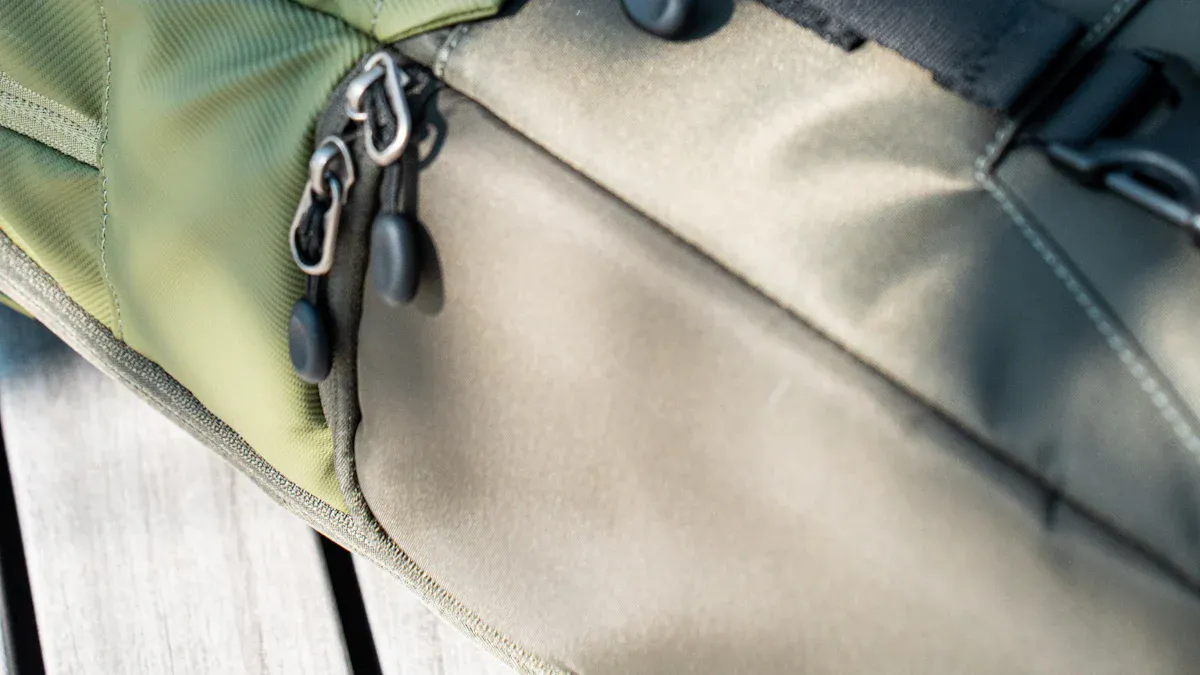
Backpacks and Storage Solutions (e.g., Suerte mesh pockets)
On every adventure, you rely on your backpack to organize and protect your essentials. Mesh fabric plays a crucial role in modern backpack design. Many backpacks, including those from Suerte, feature mesh pockets on the sides and front. These pockets allow for quick access to water bottles, snacks, and maps. The open structure of the mesh fabric allows for airflow, helping to reduce moisture buildup and keep items dry. The lightweight nature of the mesh fabric makes it easy to carry even when the pack is full.
Mesh fabric is durable enough to withstand harsh outdoor environments. It is tear-resistant and tensile-resistant, making it reliable even on rugged mountain trails. Applications of mesh fabric in backpacks include:
- Enhancing the breathability of storage compartments and reducing internal moisture
- Providing lightweight, tear-resistant pockets for quick access to essentials
- Improving ventilation to keep gear dry and comfortable
- Adding flexible storage options that adapt to different shapes and sizes
You’ll find that mesh pockets make your camping gear more organized and easier to access. The durability and adaptability of the mesh material ensure your backpack works reliably in any environment.
Tents, Shelters, and Outdoor Protection
When setting up a tent or shelter, you want to be protected from mosquito bites and inclement weather while also maintaining comfort. Mesh materials perfectly meet both needs. For example, the Breeze Mesh Tent’s fine mesh effectively blocks mosquitoes and other small insects. At the same time, it allows for excellent airflow, keeping the shelter cool and comfortable. Furthermore, the mesh canopy allows you to enjoy the starry sky at night, showcasing its breathability and good visibility.
On clear nights, you can use a mesh tent alone for optimal ventilation and insect protection. Combined with a tarp, it creates a lightweight and versatile shelter system. The mesh fabric keeps out insects, while the tent floor prevents ground moisture from entering. Many outdoor enthusiasts choose mesh tents for ultralight hiking because they strike a good balance between ventilation and insect protection.
Here are some common uses of mesh in tents and shelters:
- Creating a midge barrier to block even the smallest insects
- Allowing stargazing while maintaining good visibility and providing protection
- Promoting airflow and preventing condensation and overheating
- As part of a modular camping gear system for increased flexibility
Thanks to the clever use of mesh fabric, you experience greater comfort and safety in your outdoor shelter.e greater comfort and safety in your outdoor shelter thanks to the thoughtful applications of mesh fabric.
Outdoor Clothing and Apparel
You need clothing that keeps you comfortable during every outdoor activity. Mesh netting material excels in You need comfortable clothing to stay comfortable during various outdoor activities. Mesh fabrics excel in outdoor apparel, especially for sportswear and casual wear. The open-pore weave of mesh fabrics allows for maximum airflow. This breathability helps dissipate heat, prevents overheating, and promotes rapid evaporation of sweat. Even during strenuous activity, you’ll stay dry and comfortable.
The interwoven texture of mesh fabrics creates warm air layers, providing greater warmth at the same weight compared to tightly woven, close-fitting clothing. This structure helps regulate body temperature, allows airflow, and aids in cooling when needed. Mesh fabrics are lightweight and quick-drying, making them ideal for sportswear, casual wear, and other outdoor gear. Mesh panels are commonly found in jackets, shirts, shorts, and even hats to enhance breathability and comfort.
Applications of mesh fabric in clothing include:
- Enhancing thermoregulation and improving comfort during exercise
- Promoting rapid moisture evaporation to keep skin dry
- Maintaining warmth and protection while reducing weight
- Providing flexibility and stretch for easy movement
The superior performance of mesh fabric in extreme environments gives you peace of mind. Historically, mesh thermal underwear has helped explorers stay warm and dry during long expeditions, demonstrating the enduring value of this fabric in outdoor clothing and camping gear. Today, you can enjoy the same advantages in sportswear and casual wear, making every adventure even more exciting.
Footwear and Performance Shoes
Footwear is crucial for outdoor activities. Mesh plays a key role in modern high-performance footwear, especially for sports like hiking, running, and trail running. You’ll immediately feel the difference when choosing mesh shoes. The open-knit construction allows air to circulate around your feet, keeping them dry and comfortable even during long hikes or intense runs. This breathability helps prevent heat and moisture build-up, thus avoiding discomfort or blisters.
Mesh shoes are lightweight and comfortable. The lightweight construction reduces fatigue and stress, allowing you to move faster and farther without feeling burdened. The flexibility of the mesh material also benefits you greatly. It conforms to the shape of your foot, providing a comfortable wearing experience and reducing the risk of blisters. Mesh uppers, combined with cushioned insoles and sturdy outsoles, provide support and comfort for a variety of outdoor activities.
Advanced mesh fabrics are used in high-performance athletic shoes. Engineered mesh and double-layer mesh provide additional durability and targeted support. These properties allow the shoes to maintain a longer lifespan, even in harsh environments. Mesh is also suitable for sportswear and casual wear, as these garments require both comfort and performance.
Here are some advantages of mesh footwear:
- Lightweight design minimizes fatigue and enhances comfort.
- Open mesh design provides maximum breathability, keeping feet cool and dry.
- Moisture-wicking properties draw sweat away from the skin.
- Stretch mesh conforms to the shape of the foot, reducing blisters.
- Advanced mesh material increases durability and provides better support on rough terrain.
- Breathable mesh design helps prevent foot problems caused by prolonged or hot exercise.
Tip: Choose mesh shoes for hiking, running, or any outdoor activity that prioritizes breathability and comfort. You’ll find every workout easier, more comfortable, and less tiring.
Outdoor Accessories and Organizers
You use many accessories and organizers to keep your outdoor experience smooth and efficient. Mesh stands out in these applications because it combines visibility, breathability, and strength. You often see mesh in storage pouches, gear organizers, and utility bags. The open structure lets you see what’s inside at a glance, so you can quickly grab what you need.
Mesh organizers keep your equipment dry and fresh. Air flows through the fabric, which helps prevent moisture buildup and odors. You can store wet or damp items, like towels or swimwear, without worrying about mold. Mesh pockets in backpacks or jackets hold small essentials, such as snacks, maps, or tools, within easy reach.
Sportswear and activewear brands use mesh in hats, gloves, and even belts. These accessories benefit from the same breathability and lightweight feel as mesh fabric for clothing. You stay comfortable and organized, whether you are on a day hike or a multi-day camping trip.
Here are some common uses for mesh in outdoor accessories:
- Storage pouches for quick-drying and easy visibility
- Gear organizers for separating clean and dirty items
- Mesh pockets in backpacks, jackets, and vests
- Breathable hats, gloves, and belts for added comfort
- Utility bags for carrying sportswear and activewear
| Accessory Type | Mesh Benefit | Example Use |
|---|---|---|
| Storage pouch | Quick drying, visibility | Wet towels, swimwear |
| Backpack pocket | Breathability, flexibility | Snacks, maps, tools |
| Utility bag | Lightweight, strong | Carrying sportswear |
| Hat/glove/belt | Comfort, moisture control | Outdoor sports and activities |
Note: Mesh accessories help you stay organized and comfortable. You save time and effort when your gear is easy to find and stays fresh.
Choosing the Right Mesh Netting Material for Outdoor Gear
Material Types and Their Outdoor Benefits
When choosing mesh fabric for outdoor gear, you have many options. Each fabric offers unique advantages for different environments and uses.
- Polyethylene, polypropylene, and nylon mesh are lightweight and durable. These materials are resistant to UV rays and chemical corrosion, making them ideal for bird netting, fencing, and marine equipment.
- Rope netting uses high-strength fibers such as polypropylene or nylon. It combines flexibility and durability, making it ideal for both outdoor and marine environments.
- Cable netting made of steel cables has a high load-bearing capacity. This type of cable netting is suitable for security fencing and high-intensity outdoor applications.
- Stainless steel mesh (304/316) is known for its excellent corrosion resistance. You can confidently use it in harsh marine or chemical environments.
- Merino wool mesh fabric has natural temperature regulating and odor-resistant properties, keeping you comfortable during multi-day trips.
- Synthetic mesh fabrics, such as polyester or nylon, are quick-drying and abrasion-resistant. You will benefit from affordable, moisture-wicking, and durable gear.
Tip: Choose mesh fabric based on your activity and environment. For example, stainless steel mesh is used in harsh environments, while synthetic mesh is used in lightweight and breathable environments.
Strength, Weight, and Durability Considerations
You certainly want your gear to be durable and perform exceptionally well. When choosing mesh fabric, consider the following factors:
- Fabric weight: Heavier mesh fabrics offer improved durability and tear resistance. Lighter mesh fabrics offer improved flexibility and breathability.
- Color: Dark colors absorb heat, while light colors reflect it. This affects comfort in the sun.
- UV protection: Essential for outdoor use, preventing fading and performance degradation.
- Chemical resistance: Important if your gear will be exposed to chemicals or salt water.
- Flame retardancy: Requires flame retardancy in flammable areas.
- Breathability: Crucial for airflow and moisture management, especially in sportswear.
- Cost: Find a balance between performance and budget.
- Manufacturer reputation and quality control: Ensure you get reliable, high-quality mesh.
- Customization and environmental impact: Look for environmentally friendly options, such as recycled nylon.
Manufacturers use abrasion and tensile strength tests to verify the performance of mesh fabrics. The Martindale test and the Whissenbeck test are used to measure the fabric’s abrasion and tear resistance. These tests help you trust the durability of your equipment.
| Factor | Why It Matters |
|---|---|
| Fabric weight | Affects durability, flexibility |
| UV resistance | Prevents fading, extends life |
| Breathability | Keeps you cool and dry |
| Durability | Withstands outdoor use |
Care and Maintenance for Outdoor Mesh Gear
Proper care can extend the lifespan of your outdoor gear. Please follow these steps to keep mesh fabric in optimal condition:
- Separate your gear by material before washing. Use a mild, environmentally friendly detergent and avoid bleach.
- Wash durable clothing on a gentle, cold water cycle. Hand wash delicate or waterproof clothing to protect the coating.
- Always air dry your gear. Avoid direct sunlight and high temperatures to prevent damage.
- Regularly check your gear for wear and tear, such as frayed seams or thinning fabric. Repair small holes with mesh patches or UV-resistant thread.
- If water seeps in, reapply a waterproofing agent.
- Store your gear in a cool, dry place in a breathable container. Clean and dry your gear before long-term storage.
- Learn basic sewing skills to repair holes and seams. Timely repairs can prevent bigger problems.
Note: Regular maintenance and quick repairs will help you enjoy the benefits of mesh fabric in a variety of adventure activities.
The versatility of mesh fabric is ubiquitous in modern camping gear. Construction contractors value its strength and adaptability to ensure durability. Farmers rely on its weather resistance for reliable protection. Craftspeople use it in creative projects, showcasing its versatility. With it, your camping gear will offer unparalleled comfort and protection. Choosing the right camping netting makes every adventure safer and more enjoyable. Suerte provides high-quality solutions to meet all your outdoor needs.
FAQ
What makes mesh netting material ideal for outdoor gear?
You benefit from mesh netting because it offers breathability, strength, and flexibility. The open weave lets air flow, which keeps you cool and dry. The material resists wear and dries quickly, making it perfect for outdoor use.
How do you clean and care for mesh outdoor gear?
You should wash mesh gear with mild detergent and cold water. Air dry your items away from direct sunlight. Regularly check for damage and repair small holes quickly. This routine helps your gear last longer.
Can mesh netting material handle harsh weather?
You can trust mesh netting to perform well in tough conditions. Many mesh fabrics resist UV rays, moisture, and abrasion. Coated mesh adds extra protection, so your gear stays strong in sun, rain, or wind.
Where do you find mesh netting in outdoor products?
You see mesh netting in backpacks, tents, jackets, shoes, and organizers. Mesh pockets, panels, and linings improve airflow and comfort. You also find mesh in hats, gloves, and storage pouches.
How does mesh compare to solid fabrics in outdoor gear?
You notice mesh feels lighter and cooler than solid fabrics. Mesh lets air and moisture escape, which helps you stay comfortable. Solid fabrics offer more wind and water resistance, but mesh gives you better breathability.