By 2025, polyester fiber mesh will be ubiquitous. This mesh stands out because it is waterproof, quick-drying, and maintains its strength even under sunlight or high temperatures. It is widely used in sportswear, healthcare, marine equipment, and safety equipment. Many industries choose polyester fiber mesh because of its durability, lightweight, and ease of cleaning. The market is growing rapidly, fully demonstrating its broad application prospects and value.
| Year | Market Size (USD Billion) | CAGR (2024-2030) |
|---|---|---|
| 2023 | 4.03 | N/A |
| 2025* | ~4.75 (estimated) | 8.45% |
| 2030 | 7.11 | N/A |
Poly fabric mesh offers you a blend of strength, comfort, and versatility across many applications.
Key Takeaways
- Polyester mesh offers excellent durability, breathability, and quick-drying properties, making it ideal for sportswear, medical supplies, and industrial applications.
- This lightweight and easy-care mesh provides comfort and saves on maintenance time.
- Polyester mesh has a wide range of applications, from sportswear and outdoor gear to medical aids and home design.
- Choosing polyester mesh allows you to obtain high-quality products at a reasonable price while supporting sustainable and environmentally friendly production methods.
- Proper care and selection of the appropriate mesh type ensure long-lasting durability and optimal performance.
What is Poly Fabric Mesh?
Definition and Composition of Polyester Mesh
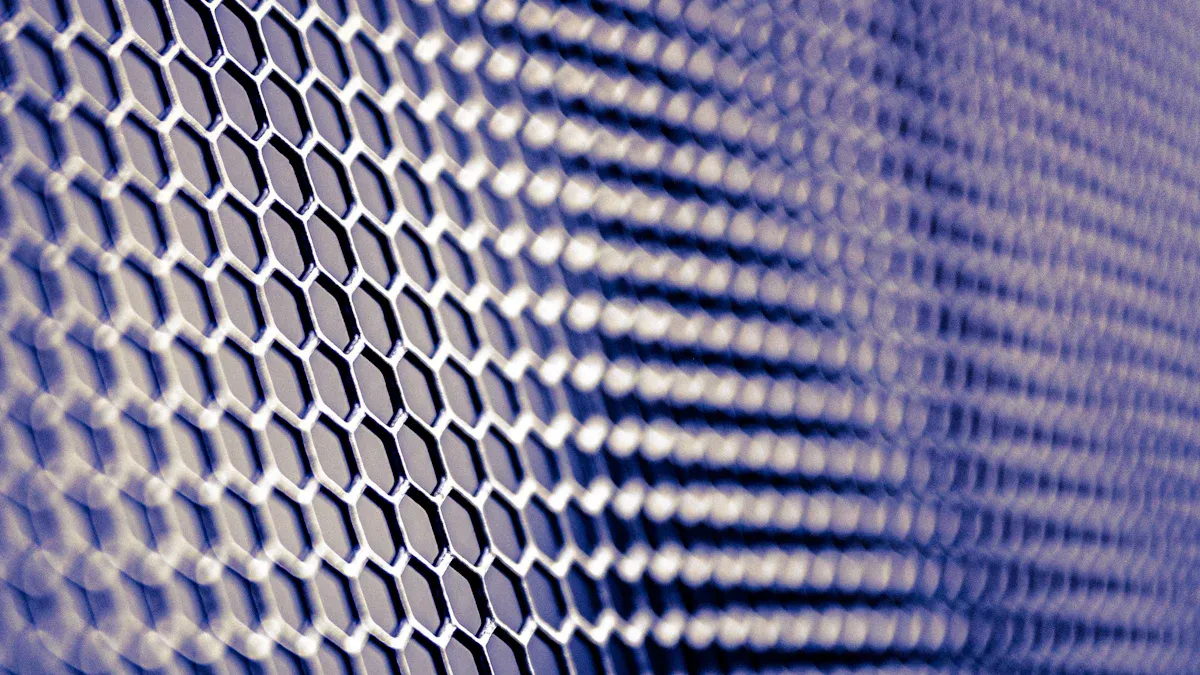
Polyester mesh fabric is now found in many products. This mesh is woven from polyester fibers, forming a mesh structure. The gaps between the fibers create a lightweight and breathable fabric. The unique feature of polyester mesh fabric is its combination of strength and flexibility. It is soft to the touch yet tough and durable.
Polyester fibers are derived from synthetic polymers. Manufacturers use these polymers to produce long, strong fibers. Looking at polyester mesh fabric, you will see its evenly distributed pores. This porous structure allows air to circulate freely. Polyester mesh fabric is widely used in clothing, bags, and even medical supplies. This material is resistant to shrinkage and deformation, and retains its shape even after multiple washes.
Polyester mesh gives you a fabric that works well in many settings. You can trust it to last and perform.
Core Properties for Applications of Mesh Fabric
Polyester mesh offers several important properties. You benefit from these features in many ways:
- Durability: Polyester mesh fabric is tear-resistant and damage-resistant, suitable for various harsh environments.
- Breathability: The open structure allows air to circulate freely, keeping you cool and comfortable.
- Quick-drying: Polyester mesh does not absorb water, resulting in excellent quick-drying properties.
- Lightweight: Wearing or carrying mesh fabric will feel light and effortless.
- Easy care: Polyester mesh is easy to clean and requires no special washing steps.
- UV resistant: The mesh protects against sunlight, allowing for worry-free outdoor use.
- Color retention: Polyester mesh retains its vibrant colors even after multiple washes.
You see these properties in many applications of mesh fabric. The advantages of polyester mesh make it a top choice for sportswear, industrial gear, and more. You get a fabric that adapts to your needs and lasts a long time.
Main Applications of Poly Fabric Mesh in 2025
Apparel and Sportswear Applications
Polyester mesh is widely used in sportswear and fashion apparel. This mesh is lightweight, comfortable, and highly breathable. When wearing sportswear, you will feel cool and comfortable because the mesh allows for free airflow. Polyester mesh fabric is commonly found in sweatshirts, shorts, and training tops. You’ll also see it in shoes, hats, and even bags. The open structure of mesh fabric helps wick away sweat, keeping you dry during intense activity.
Designers use mesh fabric in both fashionable and functional clothing. You’ll find mesh paneling in leggings, jackets, and even dresses. These panels add style while improving airflow. Polyester mesh fabric is resistant to shrinkage and deformation, so your garments will retain their shape even after multiple washes. In the casual sportswear industry, mesh fabric is also used in backpacks, gloves, and protective gear. You can benefit from its durability and ease of care. Mesh fabric balances performance and style in modern sportswear.
Industrial Applications of Mesh Fabric
You rely on mesh fabric for many industrial uses. Factories and warehouses use polyester mesh for filtration, separation, and reinforcement. You see mesh in conveyor belts, screens, and protective covers. The strength of polyester mesh makes it ideal for heavy-duty tasks. Mesh fabric stands up to abrasion and chemicals, so it lasts longer in tough environments.
Industrial applications include safety vests, work uniforms, and equipment covers. Mesh panels in safety gear help workers stay cool on the job. You also find mesh in automotive and aerospace industries. Here, mesh fabric supports ventilation and reduces weight in seats and panels. Polyester mesh helps you meet strict standards for durability and performance. You save time and money because mesh fabric needs less maintenance and replacement.
Outdoor and Agricultural Applications
Polyester mesh fabrics are widely used in outdoor and agricultural environments. Mesh fabrics provide ventilation and shade for crops and livestock. Farmers install mesh fabrics on canopies and side curtains to protect plants from strong sunlight and harsh weather. You can benefit from both air circulation and UV protection.
- Polyester mesh fabrics protect crops from UV rays, moisture, frost, hail, and excessive sunlight.
- Mesh tarpaulins and covers are tear-resistant and maintain their strength over a long period.
- UV-treated polyethylene tarpaulins with mesh components ensure airflow while protecting hay bales, grains, and delicate crops.
- The mesh fabric reduces crop rot and pests by improving ventilation.
- Mesh fabric has a longer lifespan and requires fewer replacements, thus saving costs.
- Mesh fabric helps you meet environmental standards and improve operational efficiency.
You can also see mesh fabric used in recreational products such as tents, awnings, and outdoor furniture. Mesh panels keep you cool and comfortable during outdoor activities. The versatility of mesh fabric meets the needs of both agriculture and recreation.
Medical and Healthcare Applications
You find mesh fabric in many medical applications today. Hospitals and clinics use polyester mesh for its strength and cleanliness. You see this material in surgical gowns, face masks, and wound dressings. The open structure of mesh allows air to pass through, which helps wounds heal faster. Doctors and nurses choose mesh because it resists bacteria and dries quickly.
You also notice mesh in orthopedic supports and braces. The lightweight feel of polyester mesh makes these supports comfortable for long wear. Patients benefit from the breathability, which reduces skin irritation. In some medical uses, mesh fabric forms part of implantable devices. Surgeons use mesh to support tissues during recovery. You trust polyester for its durability and safety in these sensitive environments.
Note: Mesh fabric helps keep medical environments clean and safe. You rely on its easy care and strong performance for many medical uses.
Home and Interior Design Applications
You see mesh fabric in many parts of your home. Designers use polyester mesh for window screens, curtains, and room dividers. The mesh lets light and air flow into your space while keeping insects out. You enjoy fresh air without worrying about bugs.
You also find mesh in laundry bags, storage bins, and organizers. The open weave helps items dry faster and stay fresh. Many people choose mesh for chair backs and cushions. The breathability keeps you cool and comfortable, even on warm days. Polyester mesh resists stains and fading, so your home looks bright and clean for a long time.
Some creative applications include lamp shades, wall art, and decorative panels. Mesh fabric adds texture and style to your living spaces. You can match mesh with many colors and patterns to fit your taste.
Notable Products: Suerte and Industry Leaders
You want reliable mesh fabric for your projects. Suerte stands out as a leader in the industry. The company uses advanced machinery and skilled workers to produce high-quality polyester mesh. You benefit from their wide range of fabric types and processing techniques.
Suerte offers solutions for many applications. You can request custom designs, colors, and finishes. The company supports you with quick sample verification and fast production cycles. You save time and reduce risk when you work with Suerte.
Other industry leaders also provide strong mesh fabric options. They focus on quality, durability, and innovation. You find products that meet strict standards for medical, industrial, and home uses. When you choose a trusted supplier, you get mesh fabric that performs well in every application.
Tip: Look for companies that offer one-stop service. You get help with design, fabric selection, and production, making your project easier and more successful.
Key Benefits of Poly Fabric Mesh
Durability and Longevity
You need durable materials. Polyester mesh offers excellent durability in a variety of environments. This mesh can be used for months or even years without significant wear. Manufacturers test polyester mesh in both laboratory and real-world environments to verify its strength. At the CITEVE laboratory in Portugal, experts test polyester mesh for tear strength, burst strength, mesh size, and tensile strength. These tests follow EN ISO standards and WHO procedures.
- Tear strength testing demonstrates the mesh’s resistance to tearing and snagging.
- Burst strength testing verifies the mesh’s ability to withstand pressure without breaking.
- Tensile strength testing measures the maximum tensile force the mesh can withstand before stretching or breaking.
- Mesh size testing ensures that the mesh size remains within standards even after washing and use.
You can see that polyester mesh retains its shape and strength even after 36 months of use. The fabric weight may increase with washing, but the mesh still meets the manufacturer’s standards. This means you can trust polyester mesh for long-term use in sportswear, industrial equipment, and household goods. This durable mesh fabric requires less frequent replacement, saving you time and money.
Tip: Polyester mesh is ideal for projects requiring strong and durable materials. It provides reliable performance both indoors and outdoors.
Breathability and Comfort
You’ll immediately feel the difference when you put on polyester mesh. This fabric is known for its superior breathability. The open-knit construction allows air to circulate freely, keeping you cool and dry even during vigorous activity. Polyester mesh also has excellent moisture-wicking properties, quickly drawing sweat away from your skin and allowing it to evaporate, keeping you comfortable and dry in hot and humid environments.
Let’s compare the breathability of different mesh fabrics:
| Mesh Fabric Type | Breathability | Additional Properties | Common Usage |
|---|---|---|---|
| Polyester Mesh | Very breathable due to loose knit with holes; superior breathability combined with moisture-wicking | Strongest mesh fabric; lightweight; excellent sweat-wicking; high tensile and tear strength | Sportswear, apparel |
| Nylon Mesh | Breathable but less commonly used in apparel | Used more for home items like tent screens, laundry hampers; less common in sportswear | Home goods, occasional apparel |
| Power Mesh | Breathable with higher elasticity | More elastic than regular mesh; used in shapewear and sportswear | Sportswear, shapewear |
| Tulle | Breathability inherent in mesh structure but used mainly for aesthetic purposes | Hexagon pattern mesh; used in performance attire | Performance costumes, tutus |
You notice that polyester mesh offers the best breathability and moisture-wicking properties. This makes it perfect for activewear and sportswear. You also find it in fashion items where comfort and style matter. The breathability and ventilation of poly fabric mesh help you stay fresh and dry. You do not feel sticky or overheated, even after hours of activity. The mesh fabric supports your comfort in every season.
Note: Poly fabric mesh gives you both breathability and moisture control. You enjoy comfort whether you are working, playing sports, or relaxing at home.
Cost-Effectiveness
You want to get the best value for your money. Poly fabric mesh offers you cost-effectiveness across many uses. When you compare prices, you see that polyester mesh fabrics fall into a lower to mid-price range. Specialty meshes, like trampoline mesh or Phifertex® PVC vinyl-coated mesh, cost much more. You can use poly fabric mesh in large projects without breaking your budget.
| Mesh Material Type | Price Range per Linear Yard (2025) | Example Products and Prices |
|---|---|---|
| Polyester Mesh Fabrics | $7.50 – $12.50 | 60″ 3549 Mini Mesh ($7.50), 60″ 1571 Medium Polyester Mesh ($8.50), 60″ 8838 White Polyester Athletic Mesh ($9.50 sale), 50″ 8600 Polyester Dive Mesh ($10.95), 60″ Heavy Polyester Mesh ($12.50) |
| Other Mesh Materials | $4.75 – $34.95 | Fiberglass Screening ($4.75), Nylon Athletic Mesh ($13.95), Phifertex® PVC Vinyl Coated Polyester Mesh ($25.95 – $31.95), Trampoline Mesh ($34.95), Cargo Netting ($10.50 – $32.95) |
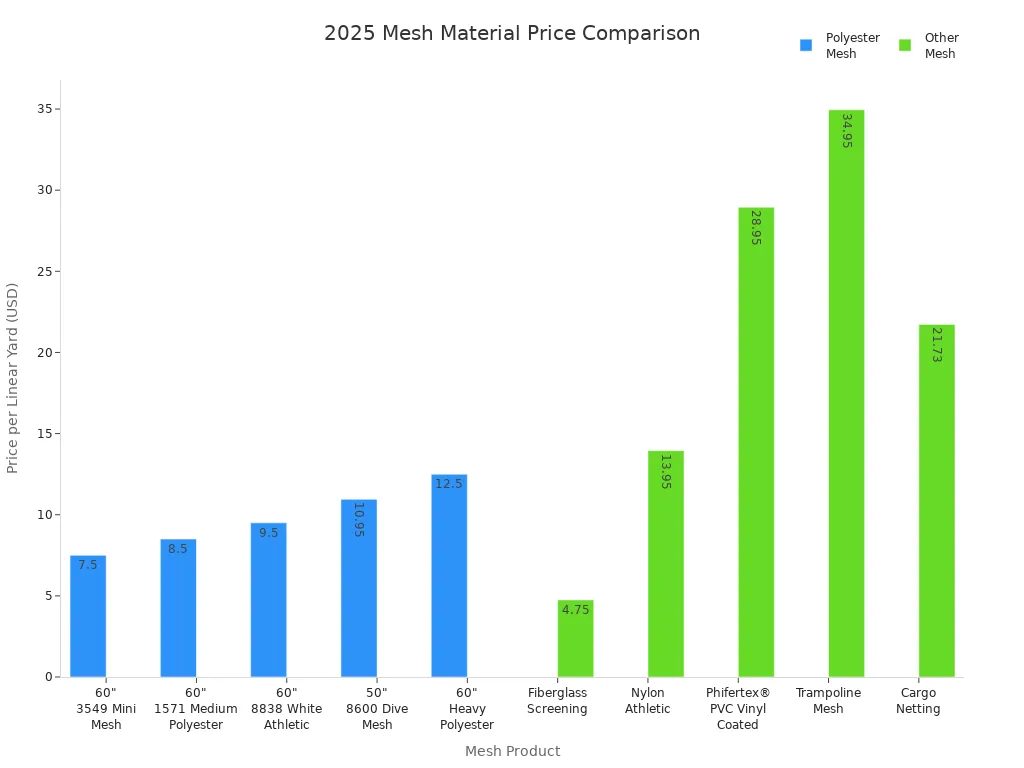
You see that poly fabric mesh gives you the advantages of durability, breathability, and moisture-wicking properties at a reasonable price. You do not have to pay extra for high performance. This makes poly fabric mesh a smart choice for manufacturers, designers, and anyone who wants quality mesh fabric for activewear, fashion, or industrial uses.
Callout: Poly fabric mesh helps you control costs while delivering top performance. You get more value for every dollar spent.
Sustainability and Environmental Impact
You care about the planet. Polyester mesh helps you make eco-friendly choices by 2025. Many manufacturers are now focused on sustainability. They are adopting new methods and materials to reduce their environmental impact. This is reflected in their mesh production and resource management practices.
The table below lists some of the key environmental certifications and green practices in the mesh industry:
| Sustainability Certification / Initiative | Description | Example Manufacturer / Practice |
|---|---|---|
| Oeko-Tex Standard | Ensures fabrics meet strict environmental and social rules. Tests for harmful substances and checks the whole production chain. | Industry-wide recognized certification for sustainable fabrics. |
| Use of Renewable Energy | Uses solar and wind power to cut carbon emissions and build greener supply chains. | MH Company uses photovoltaic power to lower its carbon footprint. |
| Biodegradable Materials | Uses GRS-certified PLA biodegradable threads, recycled fibers, and bio-based accessories. Meets biodegradability rules (at least 30%). | MH Company offers GRS-certified eco-threads and recycled buttons. |
| Advanced Wastewater Treatment | Uses better dyeing processes and closed-loop water systems to cut water pollution and save resources. | MH Company uses advanced wastewater treatment systems. |
| Circular Economy Practices | Recycles and reuses materials to reduce waste and support sustainability. | MH Company follows circular economy trends and rules. |
| Transparency and Compliance Documentation | Gives certification and compliance papers to meet rules and customer needs. | MH Company keeps transparency with certifications and eco-innovation. |
You notice that mesh fabric production now uses less water and energy. Factories use solar panels and wind turbines. They recycle water and treat waste before releasing it. Some companies use biodegradable threads and recycled fibers. This means your mesh products can break down faster after use. You help reduce landfill waste when you choose these options.
Many mesh fabric makers also follow the Oeko-Tex Standard. This means your mesh does not have harmful chemicals. You get safe products for your skin and the environment. Companies now share their certifications and eco-friendly steps. You can check these documents before you buy.
Tip: When you pick mesh fabric with eco-certifications, you support a cleaner planet and safer products for your family.
Versatility Across Applications
You need a material that meets a variety of needs. Polyester mesh offers unparalleled versatility. It’s widely used in sports, industry, home, and even the medical field. Its open-knit construction ensures breathability and quick-drying properties, keeping you comfortable and dry even in harsh environments.
Here are some common uses for mesh:
- Sportswear and equipment
- Protective clothing and safety vests
- Sports event fencing
- Backpack linings and sportswear
- Cargo separation and protection
- Car and aircraft seat pockets
- Construction site fencing
- Fishing nets
You’ll find mesh in professional sportswear, outdoor gear, and marine equipment. Its breathability and moisture-wicking properties make it ideal for sportswear. It’s also used in the aerospace and automotive industries. In these industries, mesh is used to support seat structures and seat belts. In the medical field, mesh aids in wound care and supports braces.
Mesh offers an exceptional strength-to-weight ratio. This product provides strong support without adding extra weight, making it easy to carry and use. Mesh fabric is moisture-wicking and quick-drying, reducing cleaning time and allowing you to fully enjoy your gear.
Note: Mesh fabric is breathable, moisture-wicking, and durable, making it suitable for numerous industries. Comfortable, safe, and high-performing, it’s a reliable choice.
Mesh fabric is widely used in engineered furniture, military equipment, and industrial products. Its versatility means one material can meet multiple needs. Choosing the right mesh fabric for your specific requirements saves costs and reduces waste.
Poly Fabric Mesh vs. Other Materials
Polyester Mesh vs. Cotton Mesh
When choosing clothing and gear, you’ll often have to choose between polyester mesh and cotton mesh. Each fabric has its unique advantages. Polyester mesh is known for its durability and ease of care. This fabric is less prone to stretching, shrinking, and fading. Cotton mesh feels softer and more natural, but it’s not as durable as polyester mesh under heavy use. If you need gear for sports or outdoor activities, polyester mesh offers better performance and requires less maintenance.
Here’s a brief comparison:
| Attribute | Polyester Mesh Fabric | Cotton Mesh Fabric |
|---|---|---|
| Strength | Durable, resists stretching and shrinking | Less durable, can stretch and shrink |
| Durability | Fights fading and wear, great for tough jobs | Not ideal for heavy use |
| Maintenance | Easy to clean, keeps shape and color | Needs more care, can shrink or fade |
| Moisture Handling | Wicks moisture, keeps you dry | Absorbs moisture, less effective at wicking |
| Feel | Lightweight, synthetic feel | Soft, natural feel |
Tip: Choose polyester mesh when you want a fabric that lasts longer and needs less care.
Polyester Mesh vs. Nylon Mesh
In sports and technical equipment, you’ll find polyester and nylon mesh fabrics. Nylon mesh fabric has better moisture-wicking properties, quickly pulling sweat away from the skin. Polyester mesh fabric can also wick moisture, but not as quickly as nylon. Polyester mesh fabric is more abrasion-resistant, meaning it can withstand more rough use. Nylon mesh fabric is more elastic and less prone to deformation, but it may wear out faster in harsh environments.
| Property | Nylon Mesh | Polyester Mesh |
|---|---|---|
| Moisture-wicking | Higher moisture-wicking capability | Lower moisture-wicking capability |
| Elasticity | More elastic, keeps shape better | Less elastic, shape retention lower |
| Abrasion Resistance | Lower abrasion resistance | Higher abrasion resistance |
| Breathability | Lightweight and breathable | Lightweight and breathable |
| UV, Mildew, Mold Resistance | Resistant | Resistant |
Note: For gear that experiences frequent wear and tear, choose polyester mesh. If excellent moisture-wicking properties are required, nylon mesh is the best choice.
Polyester Mesh vs. Natural Fiber Mesh
You might want to understand the comparison between polyester mesh and natural fiber mesh (such as jute or PLA-based fabrics). Natural fiber mesh is derived from renewable resources and decomposes more easily in the natural environment. Polyester mesh, on the other hand, uses petroleum-based materials, which decompose much more slowly. From a life cycle perspective, natural fiber mesh consumes less energy and water during its production. Furthermore, it produces biodegradable particles, rather than microfibers that pollute water bodies.
| Life Cycle Stage | Polyester Mesh Environmental Impact | Natural Fiber Mesh Environmental Impact |
|---|---|---|
| Raw Materials | Made from non-renewable petroleum | Made from renewable, biodegradable fibers |
| Yarn Production | Uses heavy metals, higher toxicity | Fewer toxic substances, lower toxicity |
| Fabric Manufacturing | High energy use, some energy-saving methods | Lower energy and water use |
| Consumer Use | Quick drying, but releases microfibers | No microfibre pollution, biodegradable particles |
| End of Life | Slow to decompose, recyclable but persistent | Biodegradable, compostable, decomposes quickly |
If you want a fabric with less environmental impact, natural fiber mesh is a strong choice. Polyester mesh gives you more durability and performance for demanding uses.
Choosing the Right Poly Fabric Mesh for Your Applications
Factors to Consider When Selecting Polyester Mesh
You need to choose the right polyester mesh based on your needs. First, consider its primary application. Some applications require strong, durable mesh, while others prioritize breathability. Find a mesh that matches your project. Polyester mesh comes in different weights and pore sizes. Fine mesh is suitable for medical or filtration applications. Larger mesh is suitable for sportswear or outdoor gear.
Check if the polyester mesh meets important certification standards. Standards such as the Global Recycling Standard (GRS), ISO, ANSI, OSHA, EPA, and ASTM indicate that the mesh is safe, sustainable, and of high quality. You also need to consider durability, flexibility, and whether the mesh uses recyclable or biodegradable materials. Polyester mesh with these properties balances performance and environmental goals.
Tips for Choosing the Best Mesh
You can follow some best practices to get the most out of polyester mesh. Here are some expert recommendations:
- Choose polyester mesh with high tensile strength to ensure its durability.
- If you need comfort, such as for sportswear, choose a breathable mesh.
- For sustainable development, please choose polyester mesh fabric made from recycled fibers.
- Always check for relevant certifications to ensure safety and quality.
- Use a gentle washing method. Hand washing or using a laundry net on a gentle cycle is recommended.
- Air dry the mesh fabric naturally. Avoid tumble drying to maintain the strength of the polyester fibers.
- Avoid using harsh chemicals such as bleach or strong detergents.
Tip: Store your polyester mesh folded or hung in a cool, dry place. This helps prevent damage and keeps the mesh ready for all your applications.
Common Mistakes to Avoid in Applications
You can avoid problems by watching out for common mistakes. Do not use harsh chemicals or fabric softeners on polyester mesh. These can weaken the fibers. Never leave stains or dirt on the mesh for a long time. Clean them quickly with gentle solutions like baking soda paste or diluted vinegar.
Avoid storing mesh fabric near heat sources. High heat can damage polyester fibers. Do not overload washing machines with mesh items. This can cause pilling or stretching. Always match the mesh type to your application. Using the wrong mesh can lead to poor results or faster wear.
Note: Careful selection and proper care help your polyester mesh last longer and perform better in all applications.
You see poly fabric mesh leading the way in 2025. This material supports many applications, from sportswear and medical gear to furniture and automotive parts.
- You will benefit from its breathability, durability, and ease of care.
- Companies are continuously improving the performance of mesh fabrics using new technologies and sustainable methods.
- Experts emphasize the versatility and cost-effectiveness of mesh fabrics across various industries.
Choose mesh from trusted suppliers like Suerte to meet your unique needs and stay ahead in a changing market.
FAQ
What is the best way to clean poly fabric mesh?
You should hand wash poly fabric mesh with mild soap and cool water. Avoid bleach and strong detergents. Air dry the fabric. This keeps the mesh strong and looking new.
Can you use poly fabric mesh outdoors?
Yes, you can use poly fabric mesh outdoors. The fabric resists sunlight, moisture, and mildew. You find it in tents, covers, and outdoor furniture. It stays strong in many weather conditions.
Is poly fabric mesh safe for sensitive skin?
Poly fabric mesh is safe for most people. Many manufacturers use Oeko-Tex certified materials. This means the fabric does not have harmful chemicals. You can use it for clothing and medical items.
How do you choose the right mesh size for your project?
Tip: Pick a fine mesh for filtration or medical uses. Choose a larger mesh for sportswear or outdoor gear. Always match the mesh size to your project’s needs for the best results.