Jersey fabric stretch is a unique quality allowing it to extend and snap back into shape. The global team jersey The elasticity of knitted fabrics is a unique property that allows them to stretch and return to their original shape. The global team jersey market was worth nearly $11.9 billion in 2023, demonstrating the immense popularity of this comfortable fabric. Manufacturers often add elastane fibers to enhance the fabric’s elasticity and resilience. Elasticity is primarily categorized into two types:
- Two-way stretch: The fabric stretches from one side to the other (from selvage to selvage).
- Four-way stretch: The fabric stretches both horizontally and vertically.
Understanding the different types of jersey knitted fabrics is crucial, as the broader market for functional fabrics is projected to reach $116.5 billion by 2034.
Key Takeaways
- Knitted fabrics have two stretch directions: two-way (left and right) or four-way (left and right and up and down).
- Measure the fabric’s elasticity using a simple stretch test and a ruler. This will help you match the fabric to your sewing pattern.
- When sewing knitted fabrics, use specialized tools. These tools include round or elastic needles, polyester thread, and a presser foot.
- Always pre-wash knitted fabrics before cutting to prevent shrinkage. Use a paper presser instead of pins for cutting to ensure accuracy.
- Choose a zigzag or elastic stitch on your sewing machine. This will give the thread elasticity and make it less prone to breakage.
Identifying 2-Way vs. 4-Way Jersey Fabric Stretch
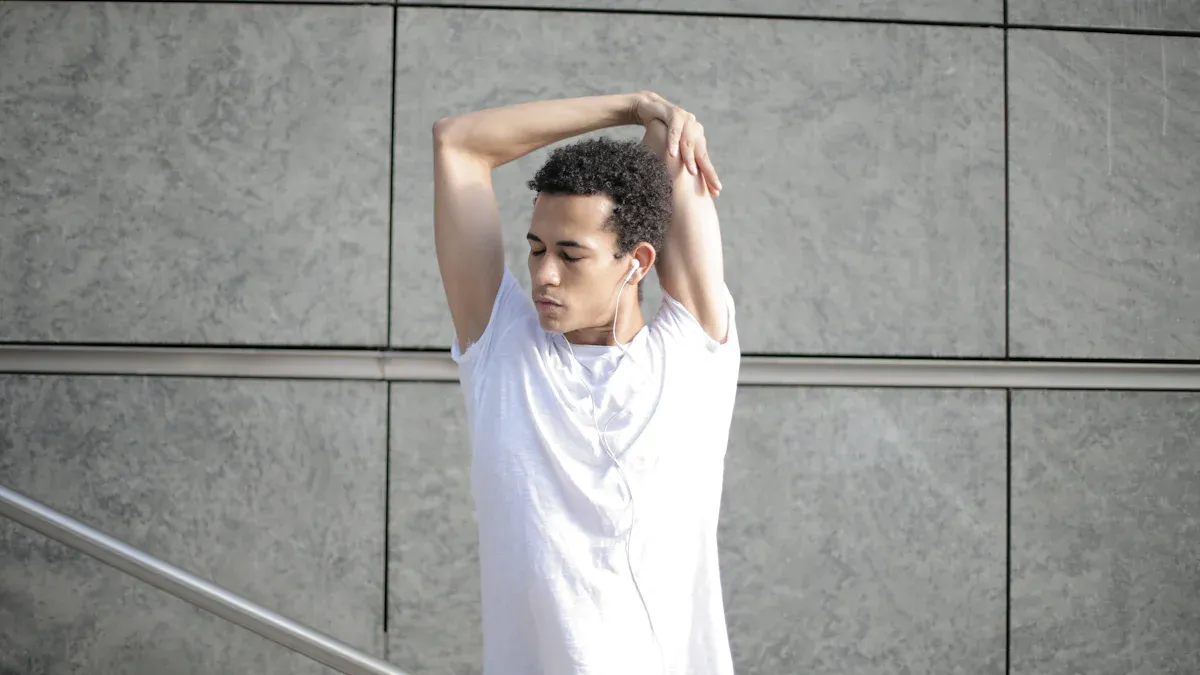
Distinguishing between the two main types of elasticity in knitted fabrics is a fundamental skill for any sewing project. You can easily determine the fabric’s characteristics through a simple hand test. This knowledge will help you choose the right fabric for your garments, ensuring a perfect fit and full functionality.
The Simple Pull Test
You can identify the stretch direction with a simple pull test. Take a small section of your fabric and gently pull it from side to side (selvage to selvage). Then, pull it from top to bottom (lengthwise).
- If the fabric only stretches from side to side, you have a 2-way stretch material.
- If it stretches both side-to-side and up-and-down, you have a 4-way stretch material.
Pro Tip: The direction with the most give is called the “greatest degree of stretch.” You should always align this direction around the body for the most comfortable fit.
When to Use 2-Way Stretch
This fabric is ideal for casual everyday wear. Its comfortable elasticity makes it perfect for clothing that requires some range of motion but not excessive flexibility. It is not suitable for sportswear or clothing intended for strenuous activity. You might consider using this fabric for the following projects:
- Dresses
- Skirts
- Pants
When to Use 4-Way Stretch
This high-performance fabric is the go-to choice for activewear and form-fitting apparel. Its ability to move with This high-performance fabric is the preferred choice for sportswear and compression garments. It stretches and flexes with the body, making it ideal for clothing requiring maximum flexibility. The advantages of this type of fabric are significant:
- Unparalleled freedom of movement: The fabric moves in sync with your body, allowing for unrestricted movement.
- Superior comfort and fit: It conforms to your body’s curves, providing a wonderfully comfortable, second-skin-like feel.
- Enhanced durability: The high-quality blended fabric is resistant to pilling and deformation, extending the lifespan of your garments.
This material is essential for yoga wear, swimwear, and high-intensity training clothing.
How to Measure and Calculate Stretch Percentage
After identifying your fabric’s stretch direction, the next critical step is to measure its stretch percentage. This number tells you exactly how much the fabric can extend. Knowing this value is essential for a successful project. It ensures your finished garment fits comfortably and looks professional. You can avoid the disappointment of a garment that is too tight or does not drape correctly.
A Step-by-Step Guide with a Ruler
You can easily measure your fabric’s stretch with a standard ruler. This simple test gives you the precise data needed for your sewing pattern. For the most accurate results, you should test both the crosswise and lengthwise grain.
Here is how you can perform the test:
- Prepare the fabric: Take a sample of fabric and fold it in half.
- Align with a ruler: Place the folded edge along the ruler. Align one end with mark 0. Secure the other end at a point (e.g., 0.10 cm or 1.5 inches), without stretching it.
- Stretch the fabric: Hold the fabric firmly at the mark with one hand. Use your other hand to pull the fabric at mark 0. Stretch as much as possible, but do not overstretch to avoid deforming the fabric. 10 cm 5 inch
- Note the measurement result: Read the new number on the ruler at the end of the fabric.
Professional tip: For best accuracy, you can use a specialized tool such as an elastic ruler. These transparent rulers are designed specifically for measuring fabric elasticity. They lie flat on the fabric to help you accurately determine if the knitted fabric conforms to the pattern requirements.
Calculating Your Stretch Percentage
Once you have the stretch measurement, you can calculate the stretch percentage. This calculation converts your measurements into a useful percentage. You can then compare this value to the pattern requirements.
The standard formula is: ((Stretched Length – Original Length) / Original Length) * 100 = Stretch Percentage
For example, suppose you initially have a 5-inch wide piece of fabric that stretches to 8 inches wide.
- Subtract the original length from the stretched length: 8″ – 5″ = 3″
- Divide this number by the original length: 3″ / 5″ = 0.6
- Multiply by 100 to get the percentage: 0.6 * 100 = 60%
Your fabric has 60% stretch. This simple calculation ensures your knitted fabric’s stretch is perfectly suited for your project.
Matching Stretch to Your Sewing Pattern
Sewing patterns for knitted fabrics typically indicate the required percentage of stretch. This information is crucial for achieving the desired fit.
Usually, a stretch guide, which looks like a small ruler, is printed on the back of the pattern sleeve. This guide shows how much stretch is needed for a given length of fabric (e.g., 4 inches). You simply compare the fabric to the guide to see if it meets the requirements.
Using fabric with less stretch than the pattern requires will cause problems. The final garment will be too small and uncomfortable. This is because patterns require the fabric’s stretch to provide “looseness,” or room to move. If there is insufficient stretch, the garment will not fit properly. Understanding different types of fabric and their characteristics is essential. For example, some high-performance fabrics from suppliers like Suerte Textile have excellent stretch and resilience, making them ideal for sportswear patterns.
Exploring Different Types of Jersey Fabric by Stretch
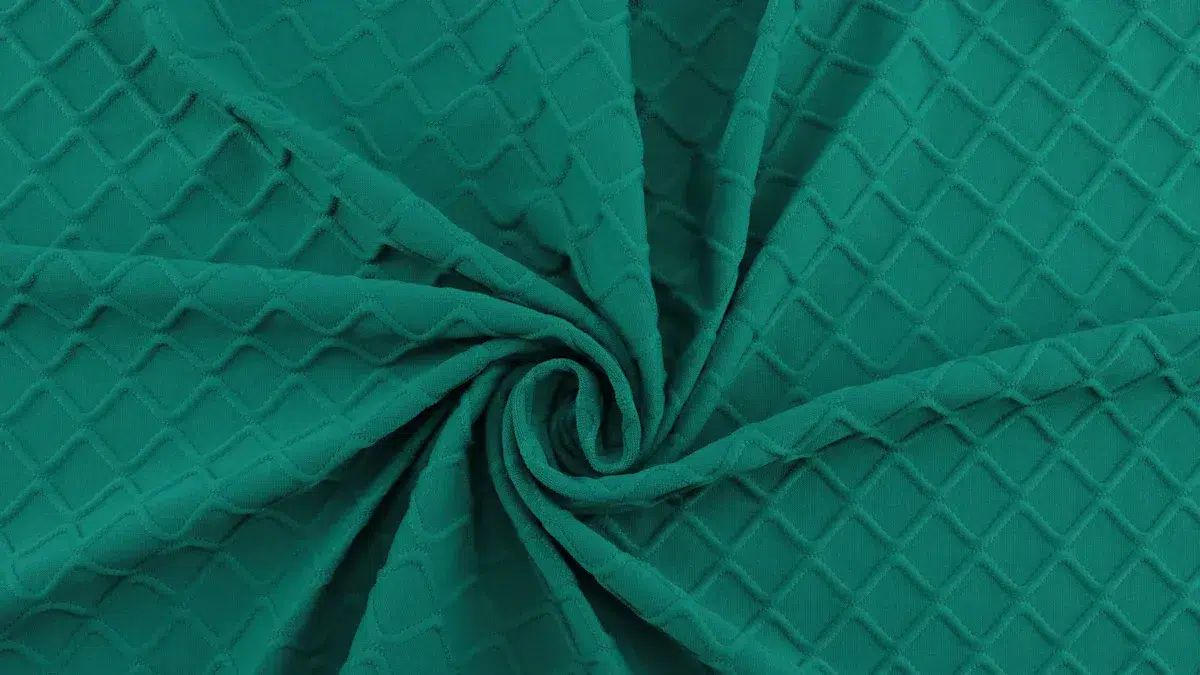
You’ll find many different types of knitted fabrics, each with varying elasticity. Understanding these classifications will help you choose the right fabric for your project. The fabric’s fiber composition and knit structure determine its percentage of elasticity. Let’s learn about these three main types of knitted fabrics.
Low Stretch (15-30%): 100% Cotton Jersey & Ponte
These fabrics offer a slight stretch, maintaining garment crispness while being easier to sew than more elastic fabrics. These different types of knit fabrics are ideal for making structured tops and casual dresses.
100% cotton knit fabric is a classic example. This single-knit fabric is breathable and soft, making it a popular choice for T-shirts. You can also find organic cotton knit fabrics, a more environmentally friendly option. While comfortable to wear, it has limited elasticity.
Ponte de Roma (or simply Ponte) is another excellent low-stretch fabric choice. It’s a stable double-knit fabric that doesn’t wrinkle easily and maintains its shape well.
Ponte de Roma: Key Features
Structure: Double-knitted blend fabric, typically made of rayon, polyester, and spandex.
Hand feel: Soft, strong, with a smooth and textured appearance.
Performance: This fabric is durable, wrinkle-resistant, and easy to sew because it does not curl.
Common uses: Suitable for blazers, fitted dresses, trousers, and skirts.
Medium Stretch (30-75%): Cotton/Spandex & Viscose Jersey
Medium-stretch fabrics offer both comfort and resilience, making them an ideal choice. These knitted fabrics are versatile and can be used to create fitted tops, leggings, and everyday dresses. This category includes some of the most popular knitted fabric types.
Cotton-Lycra knit fabric is a prime example. This blend typically contains about 3% spandex, making standard cotton knit fabrics lighter and more elastic. Therefore, cotton-Lycra knit fabric is ideal for clothing that requires freedom of movement. In this range, you’ll find many different types of knitted fabrics, including polyester knit fabrics and soft bamboo fiber knit fabrics.
Viscose knit fabrics, also known as rayon knit fabrics, are known for their beautiful drape. They are more fluid and flowing than cotton knit fabrics. This characteristic makes them ideal for creating garments with soft drapes, such as turtlenecks or pleated details. Many different types of knitted fabrics, such as modal knit fabrics and bamboo fiber knit fabrics, possess this silky drape. The single-knit construction of these fabrics makes them smooth and comfortable to the touch.
Super Stretch (75%+): Rib Knits & Athletic Blends
When your project demands maximum flexibility, you need a super-stretch fabric. These materials can often When your project demands maximum flexibility, you need a super-stretch fabric. These fabrics can typically stretch to nearly twice their original size. They are essential for sportswear, swimwear, and compression garments.
Ribbed knit fabrics, or rib knit fabrics, offer exceptional elasticity. Their unique structure contributes to this impressive stretch.
- They are characterized by alternating rows of knit and purl stitches.
- This structure allows the fabric to expand significantly in the width direction.
- Adding spandex fibers further enhances the elasticity and ensures that rib knit fabrics quickly return to their original shape.
Athletics knit fabrics are designed for high performance. These fabrics almost always have four-way stretch, providing ample freedom of movement. They are typically made from blends of polyester, nylon, and spandex. You can find a wide variety of knit fabrics in this category, from polyester knit fabrics to bamboo fiber blends. High-quality athletic knit fabrics from specialized companies like Suerte Textile offer superior elasticity and recovery, making them ideal for high-intensity activities. Suerte Textile offers a one-stop service from pattern design to production, covering a variety of fabric types, including polyester knit fabrics, diving knit fabrics, and bamboo fiber knit fabrics.
| Fabric Type | Best Sports Applications |
|---|---|
| Sport Lycra | Basketball, volleyball, gymnastics |
| Polyester-Spandex Blend | Football, soccer, baseball |
| Compression Fabric | Basketball, football, soccer |
| Scuba Knit | Swimming, diving, water sports |
Choosing the right super-stretch fabric ensures your activewear is both functional and comfortable. Whether you select a ribbed jersey for cuffs or a high-tech polyester jersey for leggings, this level of jersey fabric stretch delivers unmatched performance. These different types of jersey fabric, including cotton lycra jersey, modal jersey, and bamboo jersey, are all available as single jersey or double jersey constructions. Exploring these types helps you make the best choice. The single jersey offers a lighter feel, while the double jersey provides more stability. From organic jersey to modal jersey and bamboo jersey, the options are vast.
Essential Tools for Sewing Stretchy Jersey
Using the right tools is essential for successfully sewing knitwear. The correct needle, thread, and presser foot prevent thread stretching, skipped stitches, and other frustrating situations. Proper preparation ensures your garments look professional and are more durable.
Needles: Ballpoint vs. Stretch
You must use specialized knitting needles. Ordinary pointed needles will pierce and tear the delicate loops of knitted fabric, causing holes and unraveling. Round-tipped needles and elastic needles have rounded tips that can slide between fibers instead of cutting them.
| Needle Type | Tip Shape |
|---|---|
| Ballpoint | Medium ballpoint, slightly rounder |
| Stretch | Slightly less rounded (still ballpoint) |
Many sewing enthusiasts prefer to use elastic needles for most knitted fabrics because they are less prone to problems. You should choose your needle size based on the weight of the fabric.
| Fabric Weight | Needle Size Range |
|---|---|
| Light (4–6 oz) | 60/8–70/10 |
| Medium (6–8 oz) | 75/11–80/12 |
| Heavy (8–10 oz) | 90/14–100/16 |
Thread: Polyester or Woolly Nylon
Choosing the right sewing thread is crucial. Cotton thread lacks elasticity and is prone to breaking when stretched. You should always use elastic sewing thread.
Universal polyester thread is an excellent choice. It has slight elasticity and stretches with the fabric.
| Factor | Polyester Thread | Cotton Thread |
|---|---|---|
| Elasticity | Stretches up to 26% before breaking | Rigid with virtually no stretch |
| Shrinkage | Resists shrinking, even in hot water | Prone to shrinking with heat |
For highly elastic garments such as sportswear or swimwear, consider using wool-nylon thread. This specialty thread is ideal for circular needles on overlock sewing machines. Its excellent elasticity allows for the creation of soft, comfortable, and tear-resistant seams. These two types of thread can meet almost all your needs.
Machine Feet: Walking Foot or Teflon Foot
Regular presser feet can compress the surface layer of knitted fabrics, causing the fabric to stretch and deform during sewing. Synchronous presser feet solve this problem. They have a built-in set of feed dogs that firmly grip the surface layer of the fabric. This allows both layers of fabric to pass through the sewing machine at the same speed, resulting in a smooth and even seam. It’s one of the best tools for preventing T-shirts and leggings from deforming. Additionally, Teflon presser feet are also a good option, as they reduce friction on certain sticky or smooth knitted fabrics.
Top Tips for Cutting and Sewing Jersey
Handling knitted fabrics requires some special skills. By adjusting the cutting and sewing methods, you can achieve a smooth, professional-looking finish. These techniques help you control the fabric’s elasticity from start to finish.
Pre-Wash to Prevent Shrinking
You should always pre-wash your jersey fabric before cutting. This crucial step removes any residual chemicals from manufacturing and pre-shrinks the material. Different fabric types shrink at different rates.
- 100% Cotton: This material often shows more shrinkage, especially in single knits.
- Synthetic Blends (with Lycra): These fabrics typically shrink less, particularly in stable double knits.
Washing your fabric the same way you will wash the final garment prevents future fit issues. For best results, follow these guidelines:
- Water Temperature: Use cold water to minimize shrinkage.
- Drying Method: Air dry the fabric on a hanger or drying rack. You can also tumble dry with no heat if you are short on time.
Use Pattern Weights, Not Pins
Pins can be your enemy when working with stretchy knits. Using pins often pulls the delicate fibers together, which distorts the fabric. This pulling action prevents you from getting an exact cut. For greater accuracy, you should use pattern weights instead.
Pro Tip: You can easily make your own paper pattern weights. Simply use scraps of fabric and fill them with uncooked rice, dried beans, or polyester pellets. These weights are economical and will keep your fabric flat.
Place the weights along the edges of your pattern pieces. This holds the fabric securely without causing any distortion, ensuring your cuts are precise.
Select the Right Stitch (Zigzag or Stretch Stitch)
A standard straight stitch has no elasticity. If you use it to sew an elastic seam, the thread will break when the fabric stretches. You must choose a stitch that allows the fabric to stretch. Your sewing machine will likely offer several options.
The zigzag stitch is a widely available choice that provides excellent stretch. Another great option is a dedicated stretch stitch. While it looks like a straight line, it is formed differently to allow the seam to extend without breaking. These two stitch types are perfect for constructing garments from jersey. Always test your stitch on a scrap piece of fabric first to check the tension and appearance.
You can master jersey fabric stretch by first checking its direction and percentage. Matching the fabric’s stretch and recovery properties to your pattern ensures a perfect, comfortable fit. With the right tools, you can create professional, comfortable clothing items. Quality fabrics from suppliers like Suerte Textile help you sew comfortable, durable, and comfortable garments, making every project a success.
FAQ
What is the main difference between single and double jersey?
Single jersey is a lightweight, single-layer knit that often curls at the edges. Double jersey, like Ponte de Roma, has two interlocked layers. This construction makes the fabric thicker, more stable, and less prone to curling, giving your garments more structure.
Can I use a regular sewing machine for jersey?
Yes, you can absolutely sew jersey with a standard sewing machine. You must use the correct tools for success.
- Install a ballpoint or stretch needle.
- Select a stretch stitch, like a narrow zigzag.
- Consider using a walking foot for even feeding.
Why does my jersey fabric curl at the edges?
Single jersey fabric curls due to the tension in its looped knit construction. This tension naturally pulls the cut edges inward.
Tip: You can manage curling by using pattern weights instead of pins. Handling the fabric gently during cutting and sewing also helps minimize this effect.
How do I choose the right jersey for my project?
You should always choose the appropriate fabric stretch percentage based on the pattern requirements. Also, consider the garment’s final purpose. Exploring different types of knitted fabrics will help you find the best fit for your specific project based on their weight, drape, and construction.